



Can we measure everything?
Omnipresent in the most varied areas of our daily lives, measurements seem natural to us. Standards, scales, gauges… are the tools that come to mind to establish them. Situated halfway between theory and experiment, they often rely on physical models which prove to be indispensable, especially when quantities, like the radius of the Earth, are inaccessible to direct measurement. Conversely, measurements can support or invalidate a theoretical model, like the existence of the ether. Finally, how can we assign a value to qualitative notions such as intelligence, happiness or even virtue?
All articles in this folder
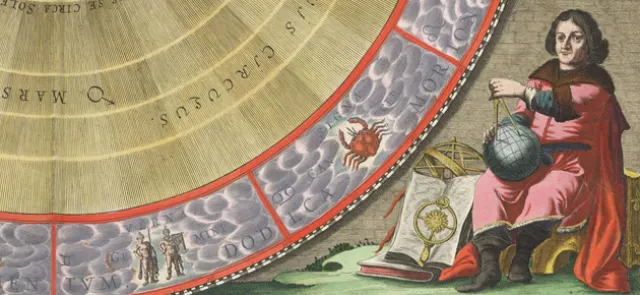
Mathematical models and measurement | Tangente
When direct measurements are impossible, we must rely on mathematical models, which need to be validated. The results then depend on the precision of the available direct measurements and on how well suited the chosen model is.
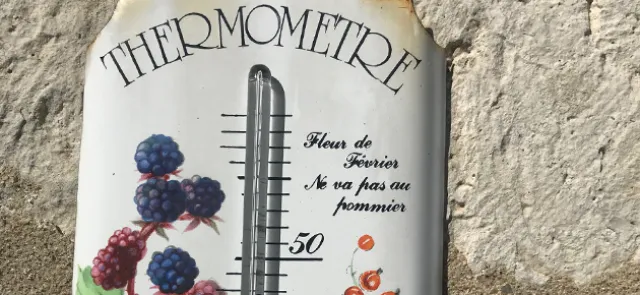
Numbers and measurement
Numbers and measurement have followed parallel paths throughout history. While it is easy to assign a number to a length or volume, this becomes more difficult for properties that are not linear, such as temperature or the acidity of a solution.

The 100 km rule explained | Tangente
To prevent the virus from surging again as lockdown restrictions were lifted, people could travel only within a hundred-kilometre radius of their home or within their own department. This was far from fair to everyone! Who were the lucky ones?

Units of measurement: the history of the SI | Tangente
Metrology is the science of measurement. Measuring means comparing a quantity with a standard. This requires a system of units. Several such systems have emerged over the course of history, evolving as scientific knowledge advanced.

The history of the Paris meridian | Tangente
The best-known story in the history of measurement is surely the determination of our planet's circumference...
Measuring without a standard: the challenge | Tangente
It is easy to measure the distance between two points in the plane using a ruler, or to weigh something using scales. Measuring areas or volumes requires a command of integral calculus. But what about concepts for which comparison with a standard is difficult, such as happiness?