Folders
Discover how great mathematicians shaped our world, explore the links between math and other fields like art, music, or even philosophy, and relive the key moments that marked its evolution.

200 issues of Tangente
Two hundred issues. Or rather, two hundred unmissable meetings for mathematics enthusiasts. Two hundred occasions to feast on geometric treats, arithmetic gems, algebraic goodies, artistic delights and other playful, probabilistic, logical and other amuse-bouches. Testimonials from notable figures will reveal the hidden alchemy that enabled Tangente magazine to grow, to spark vocations, to help teachers, to inspire enthusiasts of scientific culture, but also to make known and understand the mathematical mechanisms hidden in countless domains. History, art, culture, science, literature, entertainment and societal topics have been present since issue 1 and will continue as long as you stay with us!

30 years of Tangente
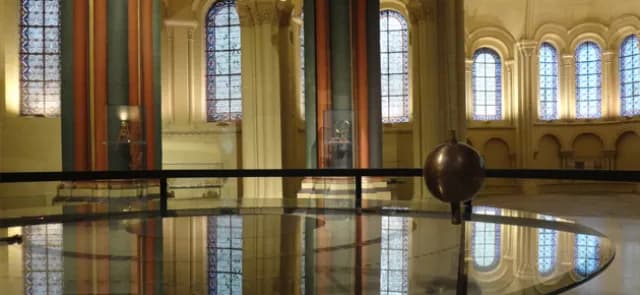
Who would have bet, in 1987, when a few enthusiasts had the outlandish idea to create a professional magazine devoted to the place of mathematics in the world around us, that Tangente, the title they had given it, would still exist 30 years later and would become the universal reference in mathematical culture? To celebrate this anniversary, the Musée des arts et métiers, open free of charge on Sunday, December 3, allowed thousands of enthusiasts to attend numerous events: visits, animations, workshops, book signings, artistic exhibitions, conferences, shows, and the award ceremony for the Affaire de Logique competition.


A committed scientist
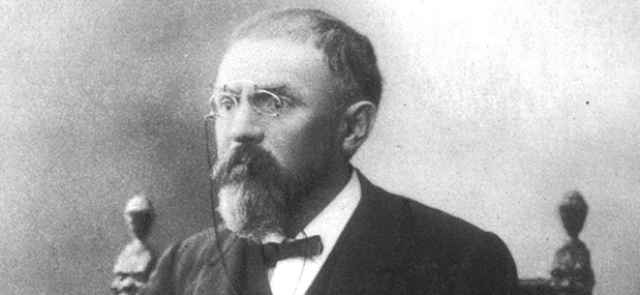
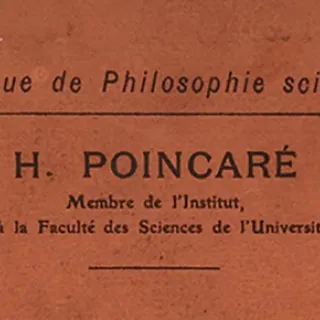
Henri Poincaré, an essential reference both in scientific terms and in literary or philosophical terms (he was a member of the Académie des sciences but also of the Académie française), committed himself on many occasions, convinced that rationality must not yield to the seductions of demagogy. 'He prefers to shock through excessive intransigence rather than run the risk of pleasing through the slightest concession,' as Émile Borel would say. Knowledge has for Poincaré a political function; it must make it possible to abolish every form of obscurantism. He fought on all fronts to promote the lights of knowledge. It is therefore not surprising to find him at the heart of the Dreyfus affair, where his commitment was decisive in 'dismantling' the prosecution's arguments. He was also involved in defending a scientific and pragmatic vision of the geodesic expedition in South America. Beyond that, he is one of the first to reflect on the psychology of invention. The influence of his writings on the artistic avant-gardes of the twentieth century is significant.

A far too short life
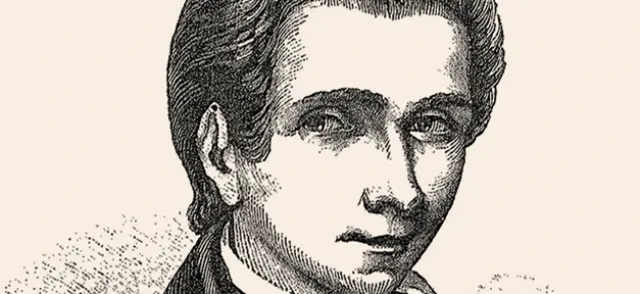
"Cursed mathematician", "romantic genius", "the Rimbaud of mathematics", "the Mozart of algebra", "misunderstood mind"... These are not the expressions that are lacking to qualify the short life of Évariste Galois, a young mathematician who died at 20 in an obscure duel. The mystery surrounding certain passages of his life, as well as the depth of his ideas, add to the legend of an icon whose personality and scientific legacy we are far from having fully understood!

A fundamentally statistical science
The world of economics is fluctuating, moving, sometimes unpredictable. It must constantly adapt to the evolution of our societies and the behavior of citizens. There is therefore nothing surprising that statistical methods, probabilistic models and tools of stochastic analysis are increasingly present in it. The data are confronted with reality, the materiality of facts, measured through surveys, field experiments, tests… Thus, in the production and management plans of companies, the structured study of past results leads to the elaborate construction of forecasting models minimizing risks and optimizing the sustainability of activities.


A genius inscribed in his century
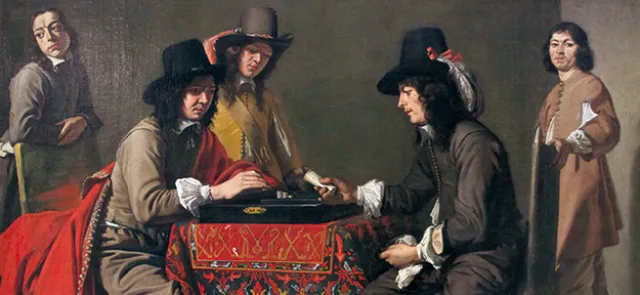
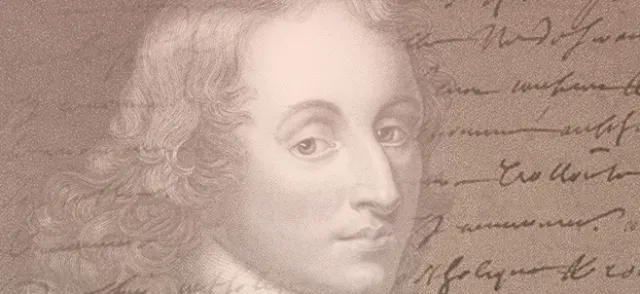
If we sometimes have the image of a most ascetic Blaise Pascal, retired in a monastery, we must not forget his multiple faces. He also experienced a breathless social life, as shown by his interest in the notion of wager prompted by games of chance. He is also a savvy entrepreneur who knows how to spot innovative or visionary ideas. Pascal is involved in many debates of his time, in science, in theology or in philosophy. The quality of his writing, his caustic humor and the solidity of his reasoning hit the mark.


A life of nomadic collaborations
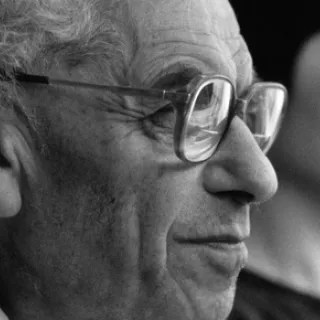
Undoubtedly an exceptional mathematician, Erdős had a life that one can certainly describe as "original", entirely devoted to mathematical problems. In permanent transit, from city to city, from conference to seminar, with a suitcase in hand and a theorem in each house, he thus established very many collaborations. His atypical behavior gave rise to many anecdotes, not always authentic. Gérald Tenenbaum, who was one of his co-authors, testifies to an experience sometimes disconcerting but always pleasant and enriching.

A mathematician with a wealth of ideas
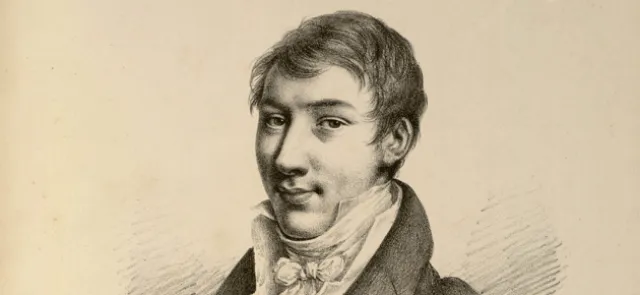
How can one hope to cover the entire body of work of one of the most prolific mathematicians in history? One of Cauchy's great merits is to have brought analysis into its modern vision, clarifying an entire branch of mathematics that had experienced tremendous growth thanks, among others, to Euler, Lagrange and Laplace. But Cauchy also revived venerable domains such as the theory of polyhedra, and created new ones such as complex analysis. He was also among the first to explore what we now call group theory. Alongside the consolidating Cauchy, there lived an exploratory Cauchy, and it is to these two facets of his scientific personality that we are equally indebted today.
A mind curious about science
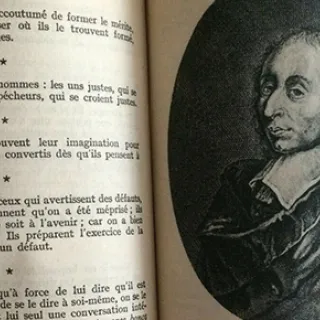
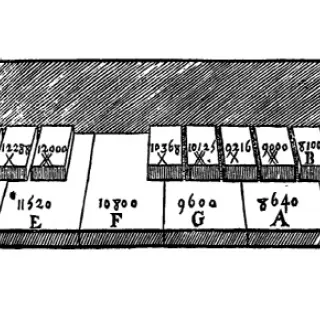
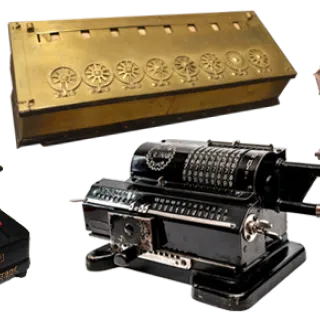
Pascal's agile mind was kept bubbling by an insatiable curiosity. His precocious genius expresses itself thus in a study of sounds whose good craftsmanship astonishes for his age. Later, he engages successfully in the debates on the existence of the void. Fearing no epistemological leap, and not without a certain taste for controversy, he proves with flair in a famous experiment the accuracy of his reasonings. He does not hesitate to 'put his hand to the work' to make his ideas concrete, as in the design of his calculating machine, a small marvel of clockwork and mechanics.
A new approach to probabilities
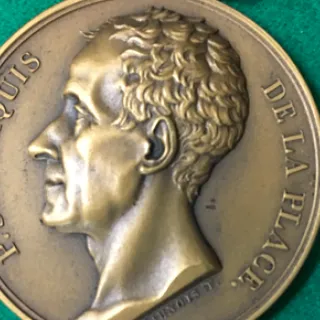
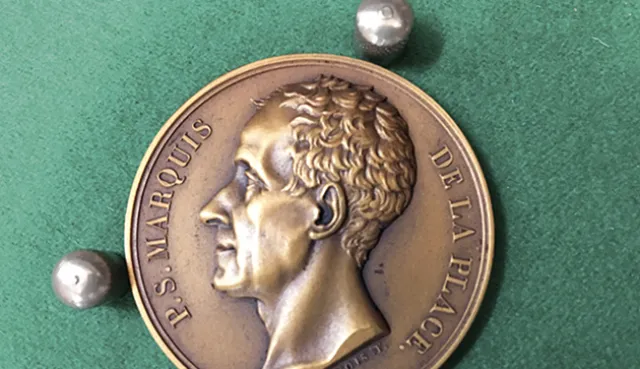
Although convinced of the deterministic functioning of the Universe, Laplace notably contributed to the development of probability calculus, bringing it into the field of mathematics. One would be tempted to see a paradox there. The scholar is actually interested in practical problems. Typically, how to choose the 'most relevant' value among several measurements? From his research, he builds a theory that leads to the normal distribution.