It is difficult to read a page of Poincaré without wondering about the concept of "reality." Scientists often grapple with this "reality" in their work, yet the phenomena of everyday life sometimes lose their substance. Older models for representing the world around us are no longer relevant to understanding modern science (see box).
Choices and conventions
----------------------------
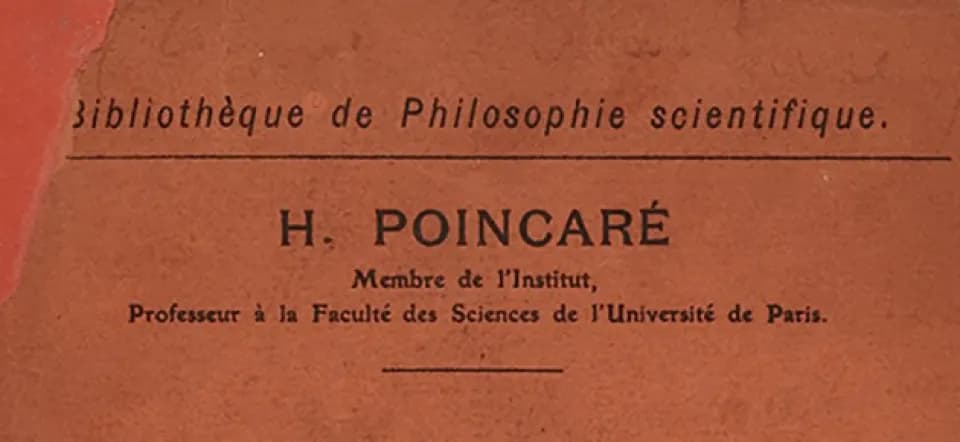
Henri Poincaré was one of the very first scientists to speak of the end of matter and to offer a glimpse of the new physics emerging in the early 20th century. In La Science et l’Hypothèse, he examines the theoretical principles that underpinned the unity of the physical world until the end of the 19th century. Most of these principles use differential equations and remain tied to a deterministic model. When Poincaré's writings appeared, positivism was dominant in France; this philosophical movement was driven by the conviction that facts should guide the development of scientific hypotheses and that the laws of the mind accord with the laws of reality.