Henri Poincaré
This issue is not fully translated into English yet; only translated content is shown.
Read the French versionAll folders in this issue




At the crossroads of sciences
Was he a physicist or a mathematician? Henri Poincaré's vision goes beyond divisions, limits, and boundaries. Dominating all the physical sciences of his era, he taught electricity as well as optics or electrodynamics. It is by studying curves defined by differential equations that he examined with an innovative eye the old problem of the stability of the solar system and gave birth to dynamical systems, a theory at the frontiers of analysis, topology and celestial mechanics. Poincaré also played a determining role in the study of the speed of light, Maxwell's electromagnetic theory and the demonstration of the Earth's motion in the ether. With Lorentz, he developed the formalism of special relativity, which Einstein would later take up.


An innovative vision of mathematics
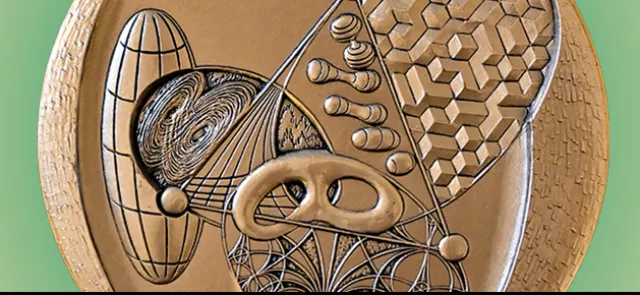
Henri Poincaré revisits each of the mathematical domains he chooses to investigate in his own way. He prefers to think for himself, to rediscover the major results, to emphasize the qualitative study of the solutions of differential equations. In this, he makes an innovative choice that allows him to open vast scientific horizons, or to renew them with creativity, such as non-Euclidean geometries. He thus accumulates original discoveries from which great and rapid notoriety results and which embodies the interaction of the multiple mathematical domains. Bringing topology and geometry into dialogue, he opens paths that, decades after his death, are still fruitful.

A committed scientist
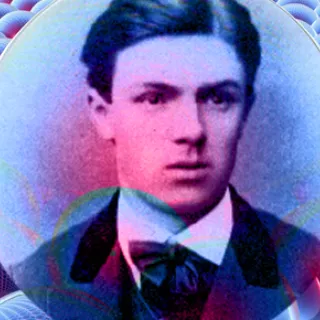
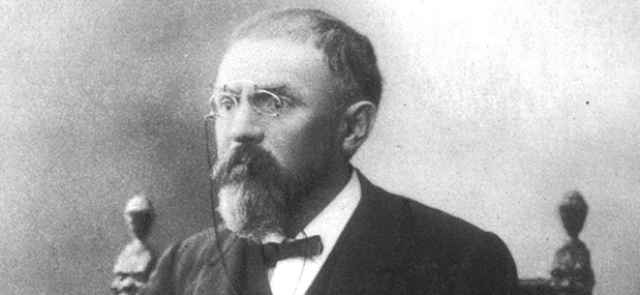
Henri Poincaré, an essential reference both in scientific terms and in literary or philosophical terms (he was a member of the Académie des sciences but also of the Académie française), committed himself on many occasions, convinced that rationality must not yield to the seductions of demagogy. 'He prefers to shock through excessive intransigence rather than run the risk of pleasing through the slightest concession,' as Émile Borel would say. Knowledge has for Poincaré a political function; it must make it possible to abolish every form of obscurantism. He fought on all fronts to promote the lights of knowledge. It is therefore not surprising to find him at the heart of the Dreyfus affair, where his commitment was decisive in 'dismantling' the prosecution's arguments. He was also involved in defending a scientific and pragmatic vision of the geodesic expedition in South America. Beyond that, he is one of the first to reflect on the psychology of invention. The influence of his writings on the artistic avant-gardes of the twentieth century is significant.