



To begin
All articles in this folder

Poincaré vs Hilbert: intuition and logic | Tangente
The debate between Henri Poincaré and David Hilbert illustrates two opposing views of the nature of mathematics.

Poincaré's irony about logicism | Tangente
Henri Poincaré regarded experience and intuition as essential to the foundations of mathematics. He was therefore often ironic, even caustic, toward those who relied on abstract logic to provide a foundation for arithmetic
Poincaré's childhood utopian government | Tangente
In 1867, having just visited the Exposition universelle, 13-year-old Henri came up with the idea of establishing a three-part system of government in the large garden at Arrancy, where he spent his holidays: a kind of federation he called Trinasie.

Poincaré and free inquiry in Brussels | Tangente
"Freedom is to science what air is to an animal; deprived of freedom, science dies of asphyxiation, like a bird deprived of oxygen."

Poincaré: a frequent traveler to scientific congresses | Tangente
Henri Poincaré traveled extensively for academic visits, meetings, and lectures.
Poincaré, the last great polymath | Tangente
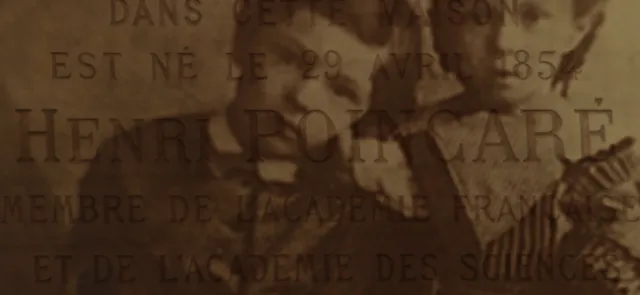
Henri Poincaré embodies an ideal of scientific unity: he mastered every field of science in his day. His name remains associated with a staggering number of mathematical ideas, concepts and objects. More than a century after his death, he continues to inspire mathematicians, physicists and philosophers.

Archives Henri-Poincaré: history of science | Tangente
A transdisciplinary team built around Henri Poincaré's name and work
Poincaré and the context of the Belle Époque | Tangente
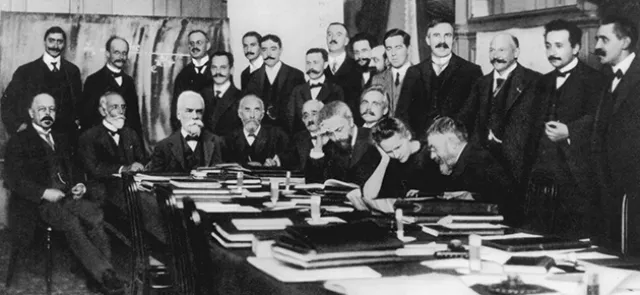
Poincaré's era was exceptionally fruitful for science: the twenty years around 1900 saw extraordinary conceptual advances and feats of intellectual ingenuity, fostered by increasingly international exchanges through publications and meetings.