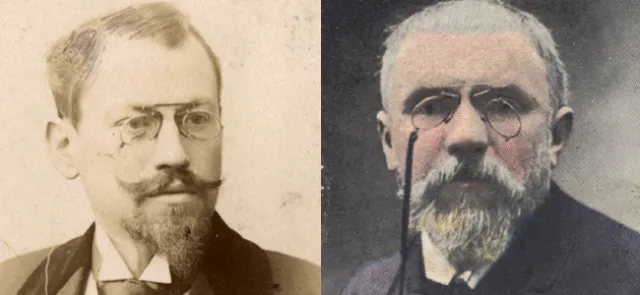
Hilbert champions an analytical view of mathematical truth, while Poincaré introduces intuition as a means of gaining access to axioms.
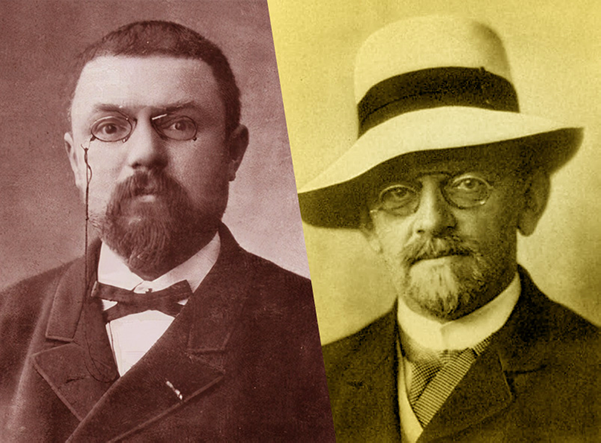
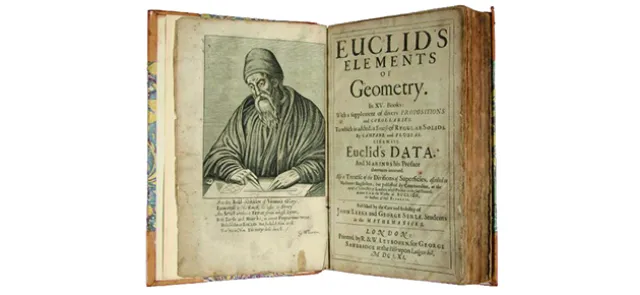
Hilbert's approach reflects a true logical orthodoxy dating back to Euclid. It begins with proof—with chains of reasoning that, from a strictly formal standpoint, unfold statements of truth. It moves from the general to the particular, with abstraction taking precedence over examples. Each chapter consists of definitions, axioms and theorems. Nothing can interrupt this predetermined process.
Poincaré, as one might expect, cannot confine himself to this logical program, which excludes the surprise of discovery, the mind's creative power and, above all, this constant engagement with reality. For him, one cannot prove a theory and only afterward observe that the path followed is coherent: "we must understand the reasons that led us to choose it". Poincaré does not abandon the demands of logic, nor does he appeal to experience to provide a foundation for those reasons. The problem lies elsewhere: logic alone cannot account for the process of discovery. The mind is not simply a mechanism; it is a subject that asks questions, tests assumptions and chooses combinations. It must be able to understand its operations as a whole.
Poincaré explains: "Once the logician has broken down every proof into a host of elementary operations, all of them correct, he will still not grasp reality as a whole; that indefinable something which gives the proof its unity will elude him completely." He attempts to reconcile two apparently opposing schools of thought: intuitionism and logicism. The mind's subjectivity accompanies the objectivity of proof.