



REMY ROMAIN
12 articles published in Tangente
 History and CultureN°98Jun 08, 2026
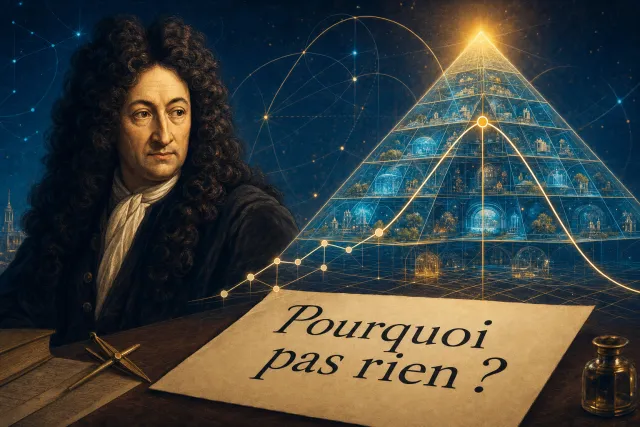
Leibniz: the quest for the best possible world through mathematics
How Leibniz uses mathematics to justify the existence of the best of all possible worlds through infinitesimal calculus, symmetry, and philosophy.
Read →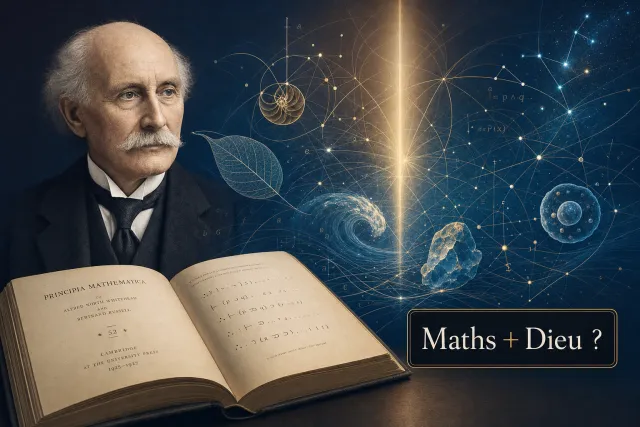 Maths and philosophyN°98Jun 08, 2026
Whitehead, or the logical harmony between mathematics and metaphysics
A journey into the thought of Alfred North Whitehead, who laid the foundations of the Principia Mathematica with Russell and developed a metaphysics of the cosmos in which God and mathematics work together in the world's unfolding.
Read → History and CultureN°211Apr 25, 2023
Wittgenstein's iconoclastic philosophy of mathematics
The relationship between language and reality lies at the heart of Wittgenstein's thought. The issue takes on its full significance when it comes to mathematical entities. What if philosophers speculating about the rigorous logical foundations of these abstractions were on the wrong track?
Read →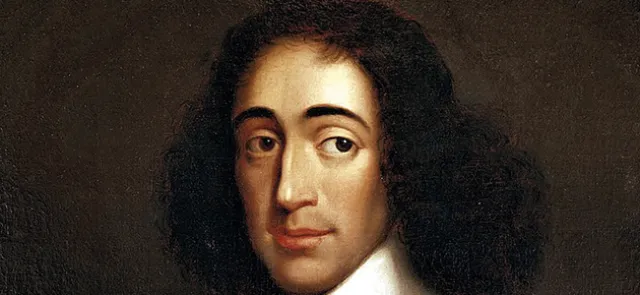 History and CultureN°210Feb 20, 2023
Spinoza and mathematical order
The Dutch philosopher Baruch Spinoza drew inspiration from mathematicians’ methods of inquiry and exposition in his "search for truth." Otherwise, he maintained, we prove nothing, merely supporting preconceived theses with plausible arguments.
Read →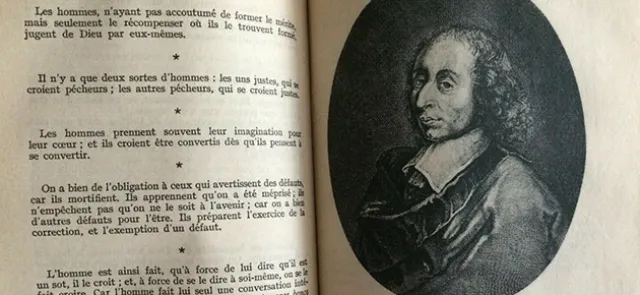 History and CultureN°85Feb 18, 2023
The rhetoric of chiaroscuro
Pascal's dialectic consists in identifying the paradoxes and contradictions in another person's discourse. He thus unsettles his readers, making them realize that where they thought they had knowledge, they know nothing. Antithesis is one of his favorite weapons.
Read →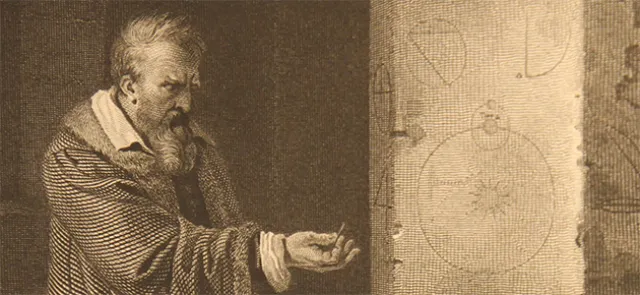 History and CultureN°207Aug 22, 2022
Mathematics and existence
Since mathematics aims at a knowledge stripped of any reference to sensible reality, nothing would seem more opposed than mathematics and existence. How, then, could mathematics express the singularity of what is? This question prompted a great deal of reflection between the seventeenth and twentieth centuries.
Read → History and CultureN°206Jun 21, 2022
What reasons are there to believe?
A free thinker, Bertrand Russell made no secret of his agnosticism and did not hesitate to criticize religion. He deplored the fact that people's reasons for embracing faith had little to do with rational argument. In his view, hatred of reason seems to be a constant throughout human history.
Read →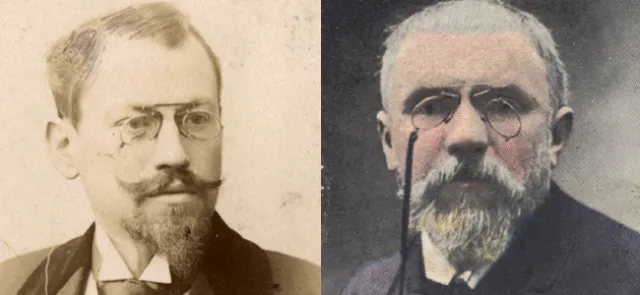 History and CultureN°79Aug 26, 2021
The psychology of invention
Henri Poincaré wrote extensively about his experience as a mathematician and the role of intuition in mathematics. Less well known is that he also agreed to take part in a clinical study conducted by the psychiatrist Dr Toulouse. Even so, the origins of mathematical creativity remain mysterious.
Read →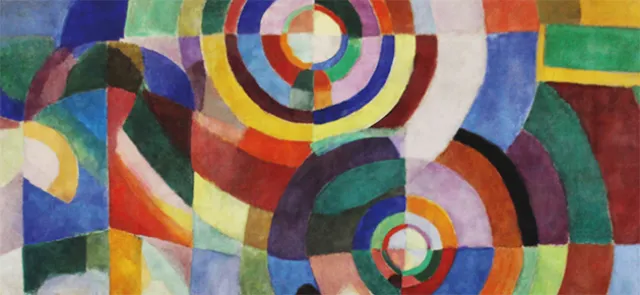 History and CultureN°79Aug 24, 2021
The pictorial adventure: Poincaré and Cubism
As an artistic movement, Cubism grew out of a fundamentally mathematical approach to space, shortly after the publication of La Science et l’Hypothèse. In it, Henri Poincaré discusses the nature of space, and artists would strive to "turn his words into paintings."
Read → History and CultureN°79Aug 24, 2021
Poincaré and science
Poincaré's works on the philosophy of science were a resounding popular success. Today they have lost none of their value, interest or charm! His distinctive way of understanding and describing facts is one hallmark of Poincaré's original thought.
Read → History and CultureN°79Aug 23, 2021
Poincaré's utopian government
In 1867, having just visited the Exposition universelle, 13-year-old Henri came up with the idea of establishing a three-part system of government in the large garden at Arrancy, where he spent his holidays: a kind of federation he called Trinasie.
Read → Math for everyoneN°79Aug 23, 2021
Poincaré / Hilbert
The debate between Henri Poincaré and David Hilbert illustrates two opposing views of the nature of mathematics.
Read →