According to the Austrian-born British philosopher Ludwig Wittgenstein, "philosophers are often like little children who first scribble some theory or other on a piece of paper with their pencil and then ask "what is it?" ". An iconoclastic thinker, he accused metaphysicians of confusing language with reality: they believe they are talking about the world when they are merely laying down standards for describing it. Philosophy, in his view, is a form of therapy that should cure us of every kind of illusion, particularly the need to ground our practices and seek a first principle for our knowledge.
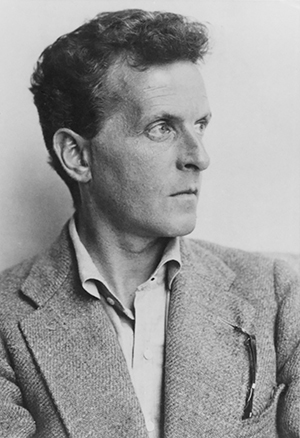
Ludwig Josef Johann Wittgenstein (1889–1951).
Laziness in mathematics
--------------------------------
For Wittgenstein, one source of problems in mathematics is the layer of theory that we are tempted to impose on mathematicians' work. Technical questions in mathematics stand on their own; they cannot be transferred to another field. In his view, therefore, all speculation about foundations is nonsense. This puts him radically at odds with the logicism of Frege and Russell (see box). According to Wittgenstein, "to argue against a Russellian logicist that mathematics is not logic is rather like saying: if tables, chairs and cupboards are wrapped in enough paper, they will surely end up looking like spheres". The possibility of supplementing every genuine mathematical proof with a corresponding Russellian proof "is absurd". Logical foundations add nothing of value to mathematics; at best, they are redundant. Wittgenstein did not take mathematical thought or its history very seriously. He denounced the pretensions of philosophers who sought to reconstruct something that already stood on its own. In his view, work in philosophy is often merely laziness in mathematics.