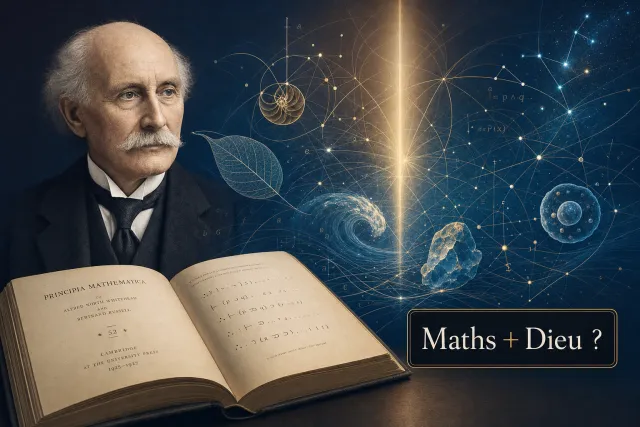
Asked what he would say to God if he met him after his death, Russell is said to have replied: " I would say to him: "God, the proofs [the evidence] you gave us were insufficient." " God, if he exists, therefore committed a logical error and encouraged us to believe beyond reason. Truth and objectivity would not be the essential criteria guiding the believer. For Russell, however, the sole reason for accepting a belief must always be "its probable truth".
A free spirit
---------------
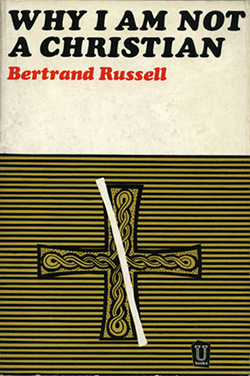
There is no doubting the vehemence of Russell's attacks on religion. In a famous lecture delivered in 1927 at the invitation of the South London Branch of the National Secular Society, under the provocative title "Why I Am Not a Christian," he emerged as a free spirit in the hidebound British society of the early 20th century. His pamphlet would be published and translated into many languages and come to be regarded as one of the century's most important texts.
In 1910, Russell's bid to stand for Parliament under the Liberal Party banner was rejected because he described himself as an agnostic and refused to attend church to preserve his respectability. Yet he did more than criticize religion. His assessment was broader: the taste for the irrational extended beyond the sphere of faith alone. The legacy of the Enlightenment was being undermined by a "nostalgia for religion." Russell highlighted the trivialization of science and the erosion of its prestige, even as the laws of nature were widely accepted. So-called civilized societies could not help seeking an imaginary foundation in the figure of a Supreme Being. On this point, the British philosopher harbored no illusions: hatred of reason is a constant throughout human history.