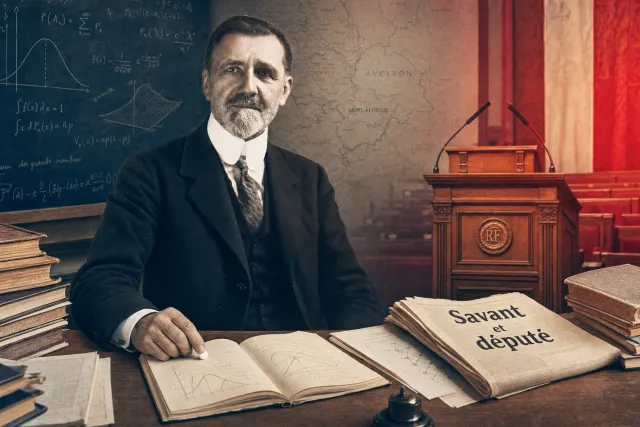
In 1909, the Université libre de Bruxelles celebrated its 75th anniversary. Major festivities were held in Belgium, where leading scientists presented their research. One speaker stood out for the originality of his approach. Poincaré opened his lecture with a warning: "I could not, as others do, speak to you about my day-to-day research: it is somewhat—how shall I put it?—esoteric, and many listeners would rather revere it from afar than examine it up close." What, then, did the great mathematician intend to discuss with his audience? Freedom! For "freedom is to science what air is to an animal; deprived of freedom, science dies of asphyxiation, like a bird deprived of oxygen. And this freedom must be unlimited, because any attempt to restrict it would leave us with only half a science, and half a science is no longer science […]. Thought must never submit to dogma, a political party, passion, self-interest, a preconceived idea, or anything whatsoever except the facts themselves, because for thought, to submit would be to cease to exist". The principles of free inquiry, the foundation of every scientific endeavor, had been set out!
History and CultureBrief
Poincaré and free inquiry in Brussels | Tangente
The founder of free inquiry
"Freedom is to science what air is to an animal; deprived of freedom, science dies of asphyxiation, like a bird deprived of oxygen."