



A fundamentally statistical science
The world of economics is fluctuating, moving, sometimes unpredictable. It must constantly adapt to the evolution of our societies and the behavior of citizens. There is therefore nothing surprising that statistical methods, probabilistic models and tools of stochastic analysis are increasingly present in it. The data are confronted with reality, the materiality of facts, measured through surveys, field experiments, tests… Thus, in the production and management plans of companies, the structured study of past results leads to the elaborate construction of forecasting models minimizing risks and optimizing the sustainability of activities.
All articles in this folder
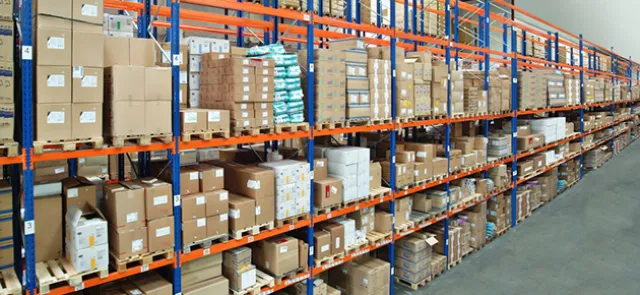
Inventory management in a stochastic setting
From small bakeries to hypermarkets, retailers face dilemmas with every product they sell. How much should they make available to customers? Too little, at the risk of losing sales, or too much, at the risk of being left with unsold goods? And, of course, at what price? A probabilistic model can help them decide.

The economist's toolkit: integral calculus
The concept of an integral can be useful in economics, for example to define an expected cost (see the article "Inventory management in a random environment")

The economist's toolbox: probability | Tangente
Collecting data only makes sense if the information is sorted, classified, and studied for useful purposes. Some data collections involve numerical data and can be processed statistically without manipulation. But this is not always the case.

The saga of the Nobel Prizes 3 | Tangente
When the collaboration between mathematics and economics results in Nobel Prizes being won...

The saga of economic indicators 3
Between 1909 and 1914, Corrado Gini carried out work aiming to calibrate the distribution of a nation's income.

An introduction to econometrics
Economic models are only simplified representations of reality. Econometrics provides a set of tools for estimating the parameters of these models and testing their validity. The trouble is, the closer we want to get to reality, the more complex the model becomes…

Markov chains and workforce management
Markov chains are used to model memoryless probabilistic processes. By modelling internal promotions, they can help analyse and develop workforce management policies in very large companies.