



A mathematician with a wealth of ideas
How can one hope to cover the entire body of work of one of the most prolific mathematicians in history? One of Cauchy's great merits is to have brought analysis into its modern vision, clarifying an entire branch of mathematics that had experienced tremendous growth thanks, among others, to Euler, Lagrange and Laplace. But Cauchy also revived venerable domains such as the theory of polyhedra, and created new ones such as complex analysis. He was also among the first to explore what we now call group theory. Alongside the consolidating Cauchy, there lived an exploratory Cauchy, and it is to these two facets of his scientific personality that we are equally indebted today.
All articles in this folder
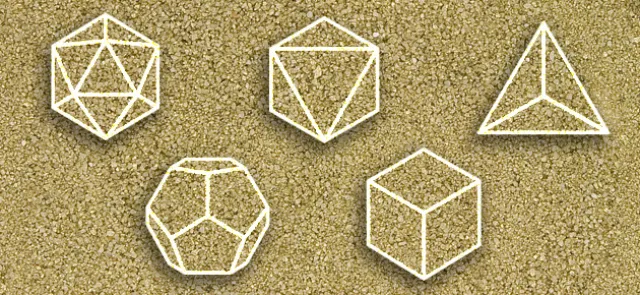
Cauchy’s first discoveries: polyhedra | Tangente
Although Cauchy is widely regarded as a highly abstract thinker, the first chapter of his work is, by contrast, strikingly visual. His study of regular polyhedra marked his entry into the world of mathematical research.
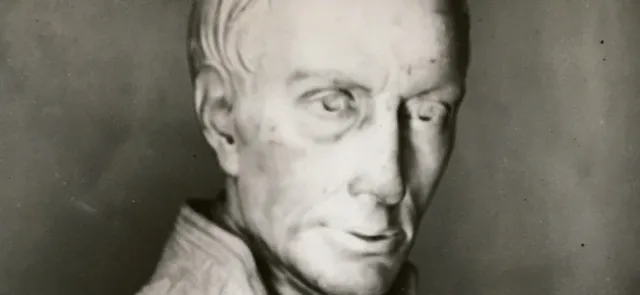
A train of thought
It took mathematicians a long time to define a convergent sequence without falling into the many logical traps involved. Cauchy's research was among the most important contributions that eventually clarified the matter.

The origins of complex analysis
Cauchy is often credited with single-handedly founding complex analysis. The reality is subtler: although Cauchy gave the subject its structure and rigor, he drew on a wealth of earlier research, notably dating back to d’Alembert. Moreover, his involvement was prompted by debates between Laplace and Poisson over whether the use of complex numbers in integral calculations was legitimate. To understand Cauchy’s work, then, we must reconstruct its entire intellectual context.

Cauchy and his rivals: a man of controversy | Tangente
Disputes over the authorship of theorems reflect the bitter controversies that pitted Cauchy against some mathematicians of his time.

Counting by substitution
At barely 25, Cauchy puts the finishing touches to a paper on symmetric functions that is eventually published as two articles. In it, he introduces new concepts, notation and methods, and creates the calculus of substitutions, which will play a central role in the development of group theory.

Cauchy's rigidity theorem and polyhedra | Tangente
Cauchy's earliest work concerned polyhedra, including his foundational rigidity theorem.