A train of thought
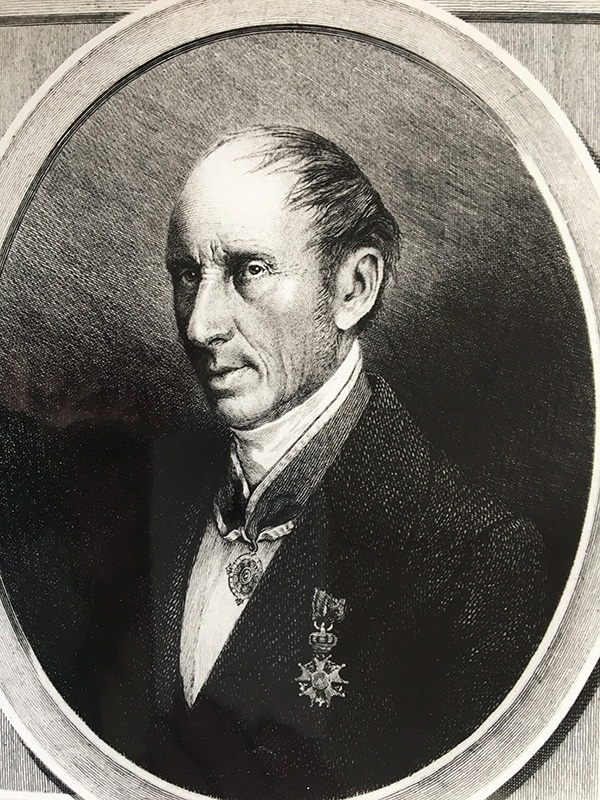
It took mathematicians a long time to define a convergent sequence without falling into the many logical traps involved. Cauchy's research was among the most important contributions that eventually clarified the matter.


It took mathematicians a long time to define a convergent sequence without falling into the many logical traps involved. Cauchy's research was among the most important contributions that eventually clarified the matter.


Articles recommended for you.

Traditional mathematics provides a precise definition of convergence for a numerical series, explored in the main body of this article. But this should not rule out less conventional approaches, discussed in the box and in several articles in this special issue.

Every convergent series can be assigned a sum—but what about divergent series? Mathematical orthodoxy holds that they cannot be assigned a value. Yet Leibniz and Euler suggested a few possible approaches. Poisson, Frobenius and Borel later crossed that forbidden line.

The introduction of series of functions, followed by theorems establishing when continuity or differentiability is preserved in the limit, made it possible to construct objects with unusual, counterintuitive properties. Some famous mathematicians had tremendous fun with them!

The field ? of complex numbers was constructed to provide solutions to every quadratic equation. Surprisingly, it also contains the solutions to all algebraic equations with coefficients in ?. In technical terms, it is algebraically closed.
Discussion
Sign in to post a comment and talk with other readers.
No comments yet. Be the first to respond.