



30 years of Tangente
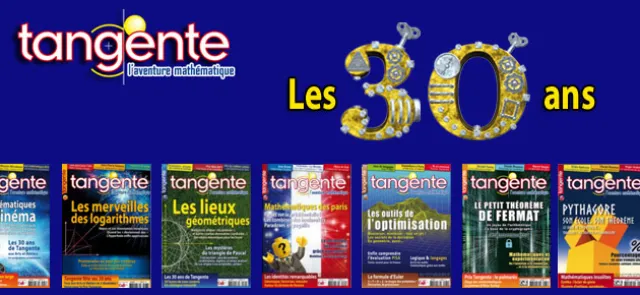
Who would have bet, in 1987, when a few enthusiasts had the outlandish idea to create a professional magazine devoted to the place of mathematics in the world around us, that Tangente, the title they had given it, would still exist 30 years later and would become the universal reference in mathematical culture? To celebrate this anniversary, the Musée des arts et métiers, open free of charge on Sunday, December 3, allowed thousands of enthusiasts to attend numerous events: visits, animations, workshops, book signings, artistic exhibitions, conferences, shows, and the award ceremony for the Affaire de Logique competition.
All articles in this folder
Tangente at 30: lectures on surprising mathematics
For Tangente's 30th anniversary, on Sunday, December 3, renowned experts will talk about the mathematics they love. Here are the summaries.

Hands-on mathematics: maths at your fingertips
Mathematics can be hands-on too! Such activities will be on offer on December 3, for Tangente's 30th anniversary.

Mathematics to make you think: games and mental arithmetic
To celebrate Tangente's 30th anniversary, here are a few small mathematical challenges to get you thinking carefully...

Sam Loyd: a puzzle-making mathematician in 15 minutes
Fifteen minutes to retrace the key moments in a mathematician's career: that was the challenge set—twice during the day—for the outstanding speakers in the conference room at Tangente's 30th-anniversary celebration (times in parentheses).
Bull's-eye: the results
Tangente's 30th anniversary coincides with another milestone: the 20th anniversary of Affaire de Logique, the weekly column in Le Monde, which celebrated its 1,000th installment with a competition run weekly for 26 weeks that drew… 1,000 participants!
A remarkable story: 30 years of making mathematics accessible
Who would have wagered in 1987, when a handful of enthusiasts had the outlandish idea of creating a professionally produced magazine devoted to the place of mathematics in the world, that Tangente would still be going thirty years later—and would become the leading reference for mathematical culture?