Between 2018 and 2020, the "History of Mathematics" forum on les-mathematiques.net uncovered a number of new details about Galois's life. It all began with "Évaristettes": short puzzles, often mathematical in nature, relating to the young prodigy's work and regularly posted by Norbert Verdier (see box). The "Évarhistoire" thread was subsequently created along the same lines, this time focusing more specifically on minor biographical mysteries. Both initiatives served the chief aim of the Association des amis d'Évariste Galois, which had just been founded at the family's instigation: "to learn more about the life and work of Évariste Galois and to make them better known".
The students
------------------
To begin with, the Évarhistoire thread raised questions about Galois's two unsuccessful attempts to enter the École polytechnique: when and where did he take the entrance examinations? In 1828 and 1829, certainly—but when and where exactly? At the time, the examinations began in Paris at 9 a.m. on August 1, in one of the rooms of the Hôtel de Ville. Which student, especially notable in the École's own history, was admitted in one of those two years? Louis Vaneau (1811–1830), who lost his life during the Three Glorious Days while leading a group of insurgents. The students still pay tribute to him every July 14. Another candidate admitted ahead of Galois was Auguste Bravais, a future crystallographer who, in a delightful irony of history, would also give his name to a concept in group theory.
People who knew Galois may have left as-yet-unknown accounts of him, so identifying them is an important first step. From this perspective, Galois's fellow students at the École préparatoire/normale offer more promise than the successful candidates for the École polytechnique. With help from several forum contributors—notably cidrolin, Norbert, and Math Coss—a list was compiled of the seventy students who attended the institution at the same time as Galois. Most pursued the careers one might expect: teachers at middle schools, high schools, or universities, with opportunities to move on to positions as academic supervisor, headteacher, dean, inspector, or rector—only a government minister is missing! Others, however, met with more unusual fates. A certain Montonnier, for instance, first distinguished himself in teaching by striking his pupils and then became a timber merchant...
The family circle
------------------
Galois's family circle is another obvious target in the search for archival material. We know, for example, that Évariste's sister kept a diary, although it has since disappeared. An investigation established that she had a daughter, followed by a granddaughter and an adopted granddaughter. Musical scores composed by the first were found, and descendants of the second were contacted—for various reasons, any surviving family archives are now difficult to access. The date of death of Évariste's sister, Nathalie Théodore Galois, wife of Chantelot, proved elusive, but persistence eventually paid off: January 26, 1881. A field investigation by cidrolin established that she is buried in Montparnasse Cemetery, "a stone's throw" from the actress Mireille Darc! An examination of the burial records revealed that twenty people were buried with Galois in a common grave at Montparnasse Cemetery on the day of his interment. The registers also show that, at that particular time, burial in a common grave was the rule rather than the exception. In the same vein, another contributor, anqian, managed to locate the grave of Pecheux d'Herbenville, Galois's opponent in the duel, in Père-Lachaise Cemetery.
His activist friends
------------------
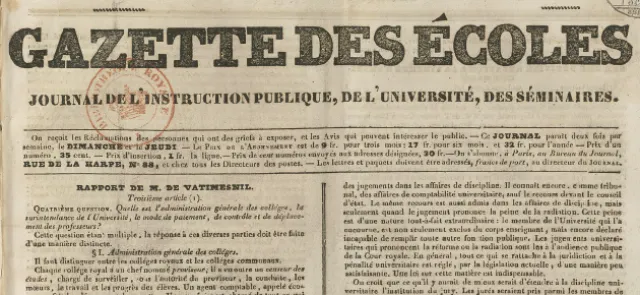
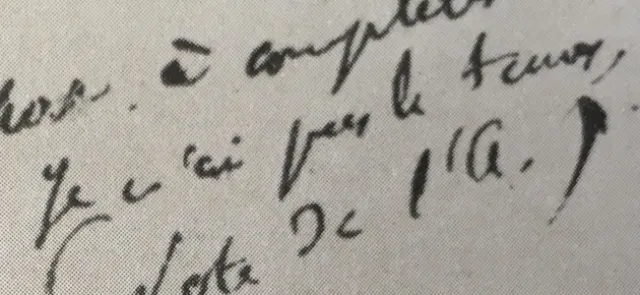
The Évarhistoire thread then turned to Galois's fellow activists, particularly the members of the Société des amis du peuple, to which he himself belonged. Two hundred and five have been identified! Along the way, reading the contemporary press led to several remarkable discoveries, including two previously unknown letters by Évariste (see below). So little of the mathematician's correspondence is known today that unearthing material like this is quite an event! An article discovered by anqian also helped to... clarify just how much alcohol had been flowing at the famous Vendanges de Bourgogne banquet, where Galois made the regicidal toast that led to his first arrest.
According to this source (Journal du Commerce, May 23, 1831), Galois himself "drank not only his own bottle of wine but also that of a neighbor who drank nothing but water". An attempt was made to usher him out, but he immediately returned. Nor was he the only one to have drunk too freely over dinner. The journalist reported that "the most fired-up among them" crossed Paris dancing and singing—or bellowing?—a great many revolutionary songs.