Folders
Discover how great mathematicians shaped our world, explore the links between math and other fields like art, music, or even philosophy, and relive the key moments that marked its evolution.

A world with many sides
Polygons largely exceed the strict framework of geometry, with practical or recreational applications. They can be found, for example, in architecture, in building plans, or in arithmetic in the form of so-called polygonal numbers. They are naturally the tessellations of many puzzles, including the oldest of them all, Archimedes' Stomachion. It was left to Bolyai, the grandfather of non-Euclidean geometry, to prove that two polygons of the same area can have the same constituent pieces. Since then, Dudeney and the Demaines, father and son, have opened a vast field of mathematical creations – and recreations – with hinged polygons.

Abstraction in mathematics
Among what distinguishes mathematics from other sciences undoubtedly stands the capacity to abstract a knowledge, an object, an idea, a notion, without having to refer to a "sensory" reality. Moreover, the question of the existence of mathematical concepts such as the number or the point has made the greatest minds "ponder", from Plato to Hilbert, passing through Leibniz and Whitehead. The advent of algebra made it possible to "increase in power" by identifying and studying increasingly general structures, which then spread to many areas of mathematics, particularly in algebraic geometry. In this context, Alexandre Grothendieck particularly distinguished himself, introducing ideas that surprise by their degree of abstraction… and their fruitfulness! But could all this be nothing more than a "simple" mechanical process observable by neurologists?
Alexis Clairaut, geometer of the Enlightenment
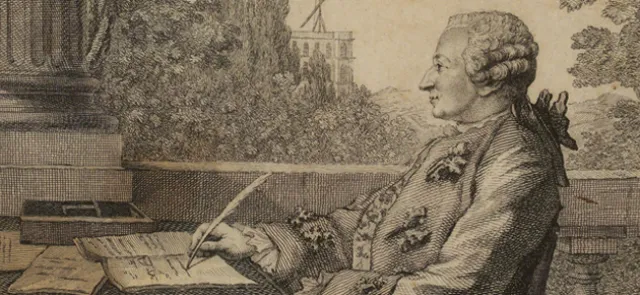
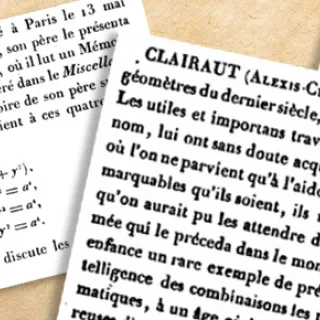
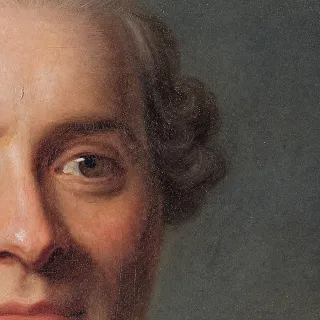
Alexis Clairaut, a relatively unknown mathematician of the 18th century, is remarkable in more than one way. Entered the Academy at 18, he gave there his first presentation of his work on skew curves at age 13. He was part of the expedition tasked with measuring a degree of meridian in Lapland, which would make it possible to settle the question of the shape of the Earth, in accordance with Newton's calculations. He also devoted a large part of his research to validating the theory of gravitation, in astronomy but also in hydrostatics. Very attached to teaching, which he practiced, among other things, as tutor to the Marquise du Châtelet, he wrote his Elements of geometry and algebra. These would still be referenced a century later.

Algebraic approach
Irrational numbers, zero, and negative numbers took centuries to be accepted. This was also the case for the "imaginary" numbers, which gave rise to the notion of complex numbers. At the origin of their – late – introduction, there was the wish to solve quadratic equations that had no real solution. This led to the conception of a powerful set, possessing the structure of an algebraically closed field, that is, in which every algebraic equation admits a solution. Better, since complexes can be identified to a point in the plane, a powerful correspondence between algebra, analysis, geometry and trigonometry was to be born!

All in your head!
The ability to perform a complex calculation mentally, in an instant, is often associated with the idea of a "gift for numbers". It is true that some mental calculation prodigies seem to possess this quality without having received any particular training. However, one must not be fooled: apart from a few cases as rare as they are fascinating, the aptitude for mental calculation develops above all through practice. This produces all the more results as it is based on a good knowledge of the underlying properties of numbers, generally founded on a mixture of algebra and arithmetic.

Amat(h)ateurs and amat(h)atrices
Before the 19th century, many of those who are now considered mathematicians did not derive their income from this activity, or even practiced another one, more lucrative. While the status of mathematician has progressively become officialized and institutionalized, the practice of the discipline still attracts many amateurs, men and women, who find pleasure in immersing themselves in certain unsolved problems, mainly in geometry and number theory. Come meet these non-professionals who find, or are still searching for, and, why not, join the community of amat(h)ateurs.
Amazing flexagons
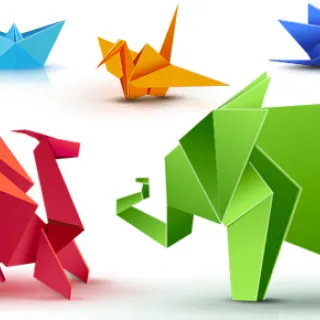
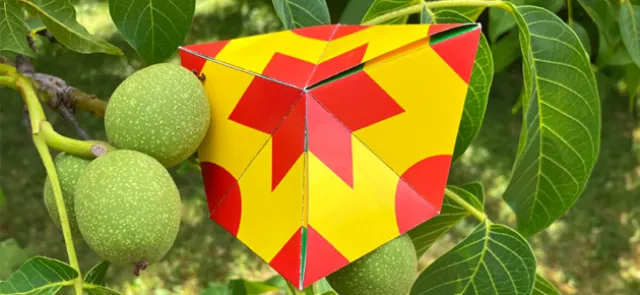
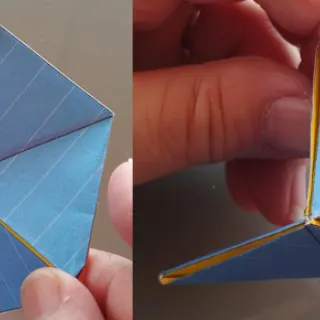
Discovered by chance during the 20th century, flexagons are flat objects, generally made of paper, which, when unfolded, reveal hidden faces. They come in various shapes and different levels of complexity. These fascinating geometric objects have not yet revealed all their secrets and many properties remain to be explored. This feature will allow the novice reader to embark in "flexology" by building their first flexagons to manipulate. For others, the discovery of some examples of flexahedra will be an opportunity to question the rigidity properties of polyhedra.
An essential structure
It is difficult to imagine algebra without group theory. However, it was only from the beginning of the 19th century that the concept developed, present implicitly in the works of Lagrange, then introduced by Galois. Initially limited to the permutation groups of a set, the concept gradually established itself in all areas of mathematics to study not only objects, but also the relationships between them. The formal definition of a group only appeared at the end of the 19th century. Many tools then developed to use, catalog, and construct the numerous examples of this unifying structure that swept through mathematics… and all the sciences. The ultimate grail, the theorem on the classification of finite simple groups still has repercussions today.
An innovative vision of mathematics
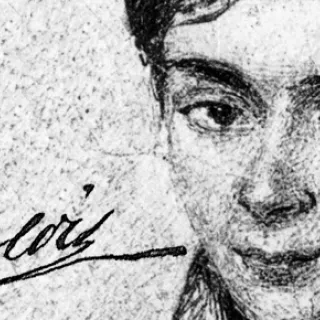
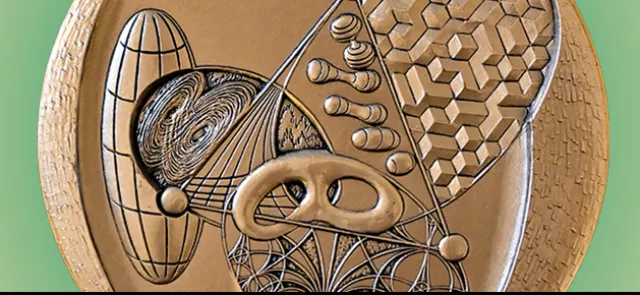
Henri Poincaré revisits each of the mathematical domains he chooses to investigate in his own way. He prefers to think for himself, to rediscover the major results, to emphasize the qualitative study of the solutions of differential equations. In this, he makes an innovative choice that allows him to open vast scientific horizons, or to renew them with creativity, such as non-Euclidean geometries. He thus accumulates original discoveries from which great and rapid notoriety results and which embodies the interaction of the multiple mathematical domains. Bringing topology and geometry into dialogue, he opens paths that, decades after his death, are still fruitful.
An omnipresent legacy
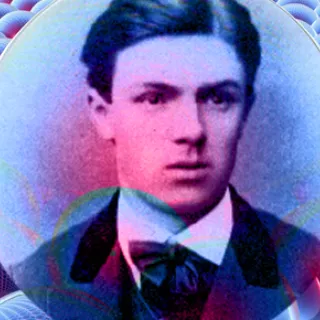
If summarizing Cauchy's multifaceted work is difficult, detailing the extensions to which his work has given rise to is impossible, so profound has his influence been. Cauchy's name is absolutely everywhere in higher mathematics: Cauchy's criterion, Cauchy's distribution, Cauchy's problem, the Cauchy-Schwarz inequality, not to mention of course the various Cauchy theorems. All these denominations bear witness to a legacy that has permeated all of mathematics. And if it happens that, thinking of one or another of the great figures of his era, the names of Galois or Gauss come first to mind, Baron Cauchy is no less one of those rare mathematicians of whom it can be said that, in all fields, there is a before and an after him.