



An essential structure
It is difficult to imagine algebra without group theory. However, it was only from the beginning of the 19th century that the concept developed, present implicitly in the works of Lagrange, then introduced by Galois. Initially limited to the permutation groups of a set, the concept gradually established itself in all areas of mathematics to study not only objects, but also the relationships between them. The formal definition of a group only appeared at the end of the 19th century. Many tools then developed to use, catalog, and construct the numerous examples of this unifying structure that swept through mathematics… and all the sciences. The ultimate grail, the theorem on the classification of finite simple groups still has repercussions today.
All articles in this folder
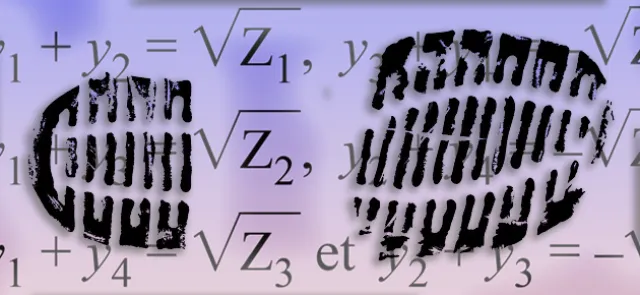
First step towards the concept of a group
As early as 1770, Joseph-Louis Lagrange took an interest in solving polynomial equations. He wanted to understand why cubic and quartic equations could be solved by radicals. This led him to study permutations of their roots.
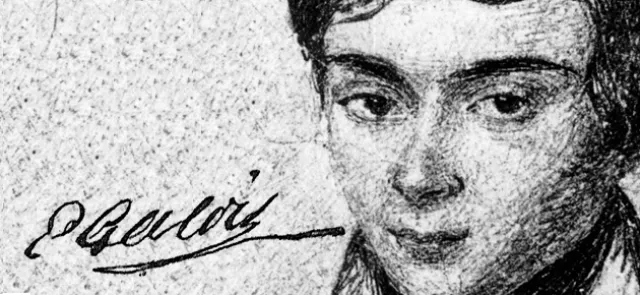
Galois's brilliant contribution
Following his work on solving fourth-degree equations, Lagrange turned to the fifth-degree case. It was not until Abel that these equations were shown not to be solvable by radicals. Galois would provide a necessary and sufficient condition for an equation of any degree to be so solvable. In doing so, he founded group theory.

Some examples of groups
The first examples that spring to mind are groups of numbers. But groups crop up in every area.

Quotient structures
A detailed analysis of the internal structure of finite groups is a formidable challenge. What can be said about an arbitrary group? The idea is to look within G for subgroups from which the whole of G can be reconstructed. Quotient structures are an unfailingly effective tool for this purpose.

The classification of finite simple groups
Are finite groups simple? Not so fast: although the classification of finite simple groups began more than a century ago, a complete proof is still being written! Work on this proof began in the late 1980s and should be completed in 2025. But the task is daunting…
Early formalizations
Évariste Galois's tragic death lent an epic quality to the introduction of the group concept in mathematics. What followed is less familiar but fascinating, culminating in brilliant theorems that are still taught today. Sixty years later, the notion of a group was finally established.

The Monster: the largest sporadic group | Tangente
The Monster is a group with more elements than there are atoms on Earth. Let’s meet it...