The classification of finite simple groups was completed in the 1980s. It is also known as the classification theorem, and sometimes as the giant theorem or the enormous theorem. The proof was colossal, comprising thousands of pages published in several hundred journal articles written by a great many mathematicians throughout the 20th century. Since then, a few gaps have emerged and subsequently been filled, and simplifications have been made: the current proof, known as the second-generation proof, is still being written. It is quite clearly the longest mathematical proof ever written.
It is simple, though!
-----------------------
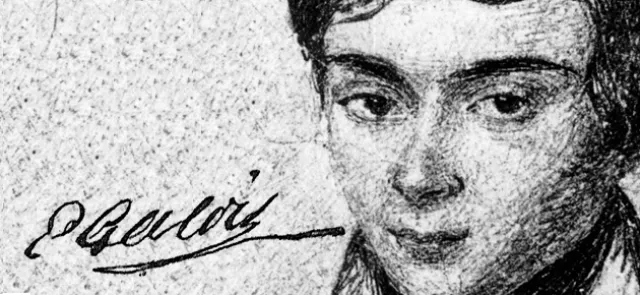
What is a finite simple group? It is first a finite group, G. The group G is simple if it contains no nontrivial normal subgroup (see the article "Quotient structures"), that is, none other than itself and the subgroup consisting solely of the identity element {e}. Évariste Galois introduced the notion of a simple group in his studies of solving algebraic equations by radicals.
The groups , under addition, are simple when p is prime. By Lagrange's theorem, the order of a subgroup divides the order of the group. Consequently, if the group has prime order, as it does here, it has no nontrivial subgroups and hence a fortiori no nontrivial normal subgroups. In fact, these are the only finite simple groups of prime order. They are also the only finite simple groups that are abelian.
Other examples of finite simple groups are the alternating groups A*n of even permutations of n elements for n* ≥ 5. This is precisely why these groups are not solvable (see the article "Galois's stroke of genius" ) and why, consequently, polynomial equations of degree n ≥ 5 are not always solvable by radicals. Note that A2 and A3 are simple, whereas A4 is not, since it contains a normal subgroup isomorphic to the Klein group (see the article "The Klein group and its many guises").