The groups
This issue is not fully translated into English yet; only translated content is shown.
Read the French versionAll folders in this issue
An essential structure
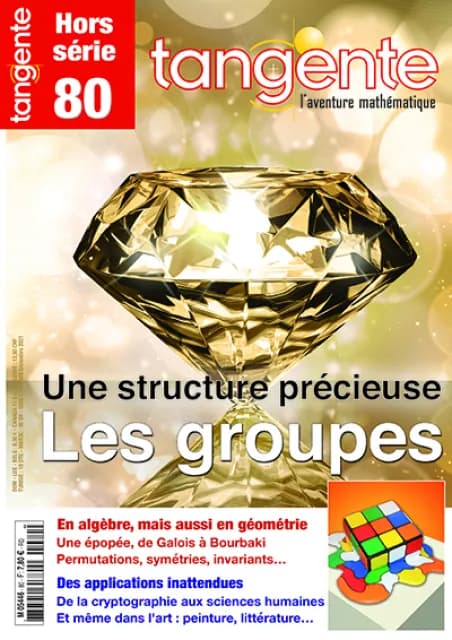
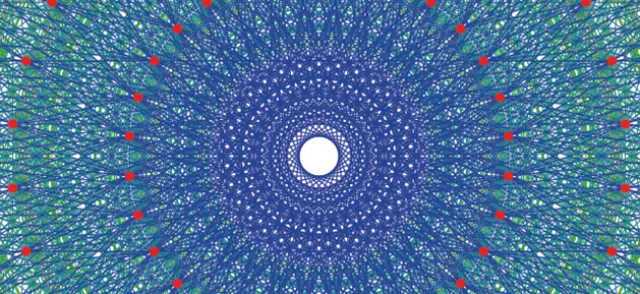
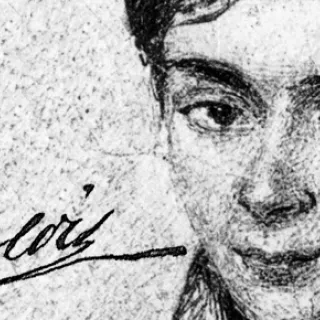
It is difficult to imagine algebra without group theory. However, it was only from the beginning of the 19th century that the concept developed, present implicitly in the works of Lagrange, then introduced by Galois. Initially limited to the permutation groups of a set, the concept gradually established itself in all areas of mathematics to study not only objects, but also the relationships between them. The formal definition of a group only appeared at the end of the 19th century. Many tools then developed to use, catalog, and construct the numerous examples of this unifying structure that swept through mathematics… and all the sciences. The ultimate grail, the theorem on the classification of finite simple groups still has repercussions today.
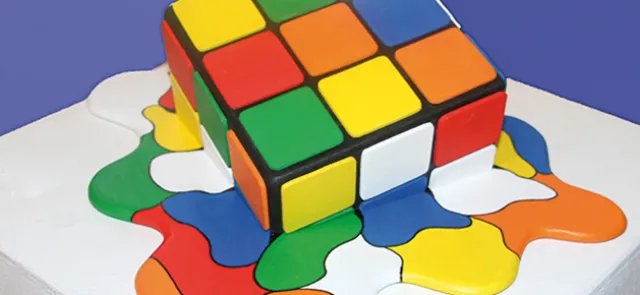
Beyond algebra
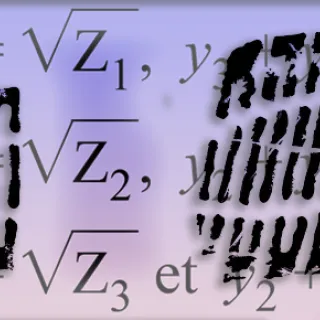
The notion of group, due to its structuring nature, is central in algebra. But it is also essential in geometry, where it allows us to understand, classify, relate, study transformations, and even characterize different geometries. Thus, if symmetries don't explain everything, they are often present, sometimes in an invisible manner. But the concept of group does not stop there: it has spread to other domains such as infinitesimal calculus and mathematical physics, where Lie groups have crucial importance.
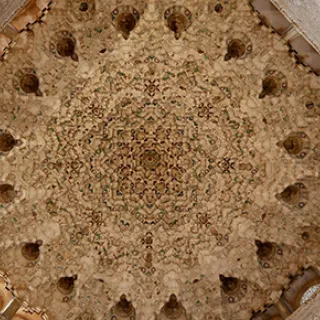

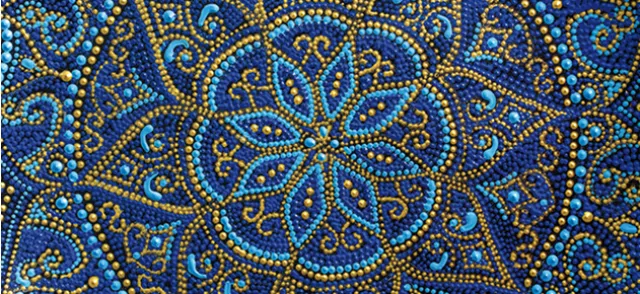
A tool for many fields
If the group is omnipresent in "pure and hard" mathematics, other domains have taken it up, aware of the advantages its presence brought: understanding of complex phenomena, new techniques, unification of ideas... not to mention the appeal that an abstract structure exerts on our thinking. In ethnology, Claude Lévi-Strauss used groups to model kinship relations in certain populations. In cryptology, the "clock arithmetic" is present for any encryption or decryption operation. Art is not left out, whether in music, literature, or painting. André Cadere's Round Wood Bars remain emblematic of the artistic representation of permutation groups.