



A tool for many fields
If the group is omnipresent in "pure and hard" mathematics, other domains have taken it up, aware of the advantages its presence brought: understanding of complex phenomena, new techniques, unification of ideas... not to mention the appeal that an abstract structure exerts on our thinking. In ethnology, Claude Lévi-Strauss used groups to model kinship relations in certain populations. In cryptology, the "clock arithmetic" is present for any encryption or decryption operation. Art is not left out, whether in music, literature, or painting. André Cadere's Round Wood Bars remain emblematic of the artistic representation of permutation groups.
All articles in this folder
Mathematical groups, even in literature | Tangente
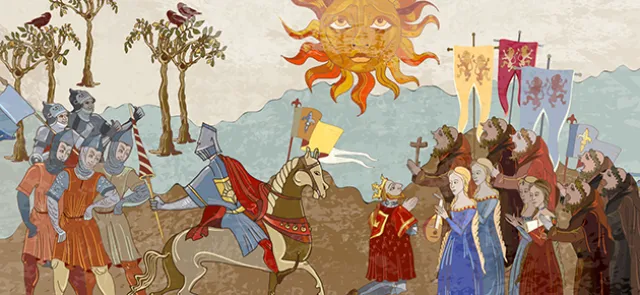
Formal structures, particularly groups, are a major focus of constrained literature that emerged from the Ouvroir de littérature potentielle (Oulipo), the literary movement founded by Raymond Queneau and François Le Lionnais in 1960.

The Rubik's Cube group: The mathematics of the magic cube | Tangente
The Rubik's Cube is a hugely popular puzzle among children and adults alike. This object, too, has its own group: all the isometries that leave it invariant.

Cryptology revisited
Groups were first used in cryptography in the 1920s and 1930s. The best-known example is the breaking of the Enigma machine. In the 1970s, groups opened the way to new encryption methods, including RSA and elliptic-curve cryptography.

An example of a group in the social sciences
A simple, classic, real-world application of the mathematical concept of a group can be found in social anthropology. It was brought to light by the anthropologist and ethnologist Claude Lévi-Strauss, working with the mathematician André Weil.
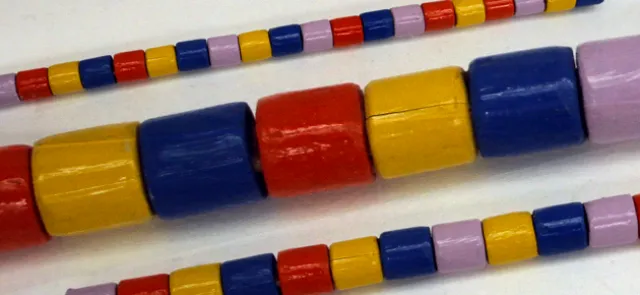
Combinations and permutations in modern art | Tangente
Permutations appear in many works of conceptual art. Let's look at a few iconic examples to see how artists have readily embraced the concept of a group.