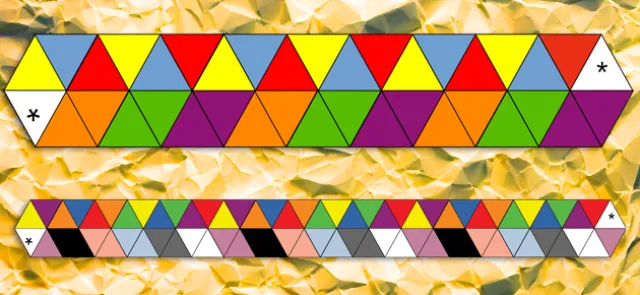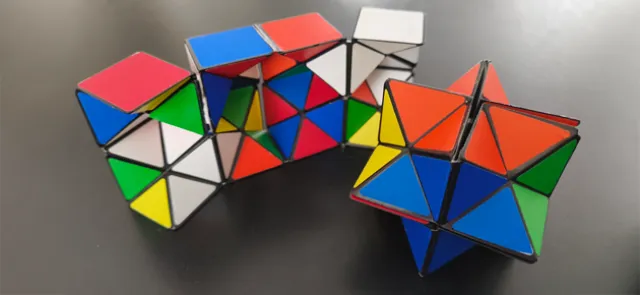
This mechanism is used in several magic tricks, including one in which a banknote is first held in place by one strap, then by two.
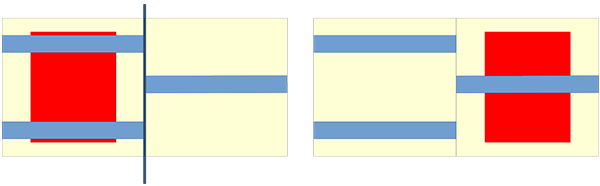
Depending on which way the wallet is opened, the banknote appears to move.
How the wallet is constructed: the straps lying on top are glued to the reverse side on the left and right. This double hinge lets the wallet flex as it is opened…
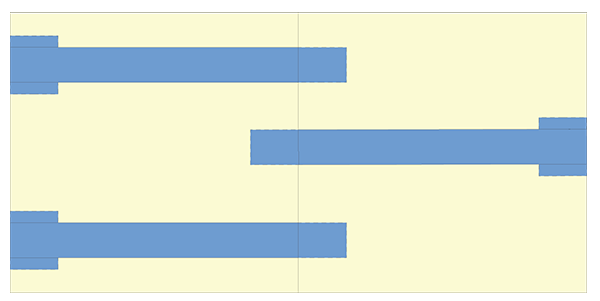
Assembling the trick wallet.
Place a banknote under both straps, close the wallet, then open it from the other side, and the banknote ends up under the single strap.
This mechanism underlies many toys, including Jacob's ladder.
A rectangular flexagon
--------------------------
The flexagon version of the trick wallet is a three-colored rectangular structure. To assemble it, cut out the hole in the middle and fold along the horizontal axes—the top square folds behind and the bottom row folds in front—to form the rectangle. We leave it to the reader to work out where to place the single piece of tape needed to complete the assembly. Note that flexing this “wallet” does not give rise to a cycle. However, a banknote placed in the center of the red face can easily be made to disappear.
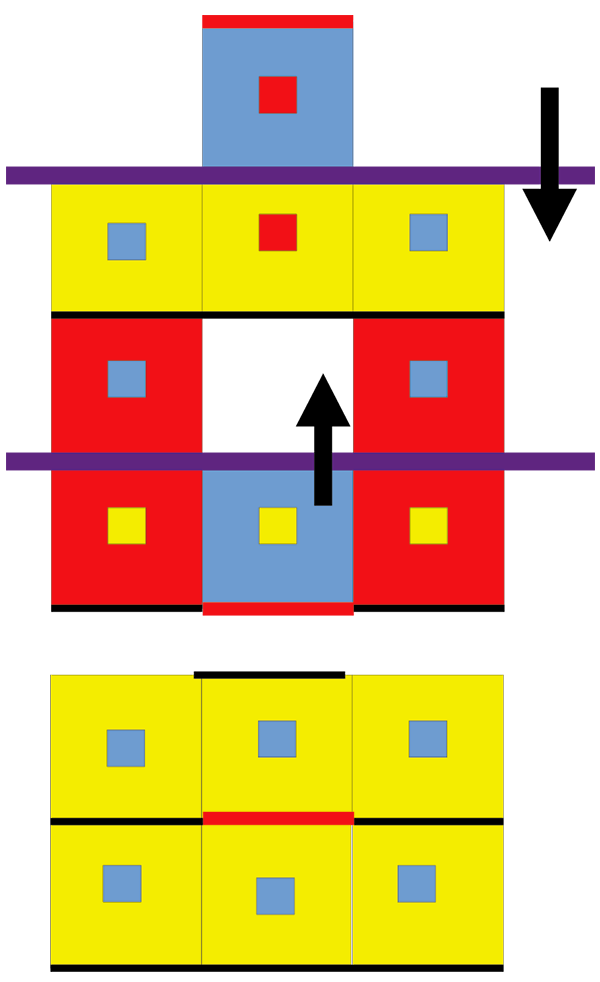
The net of the rectangular flexagon.
The dot in the center of each square indicates the color of its reverse side.