



Abstraction in mathematics
Among what distinguishes mathematics from other sciences undoubtedly stands the capacity to abstract a knowledge, an object, an idea, a notion, without having to refer to a "sensory" reality. Moreover, the question of the existence of mathematical concepts such as the number or the point has made the greatest minds "ponder", from Plato to Hilbert, passing through Leibniz and Whitehead. The advent of algebra made it possible to "increase in power" by identifying and studying increasingly general structures, which then spread to many areas of mathematics, particularly in algebraic geometry. In this context, Alexandre Grothendieck particularly distinguished himself, introducing ideas that surprise by their degree of abstraction… and their fruitfulness! But could all this be nothing more than a "simple" mechanical process observable by neurologists?
All articles in this folder
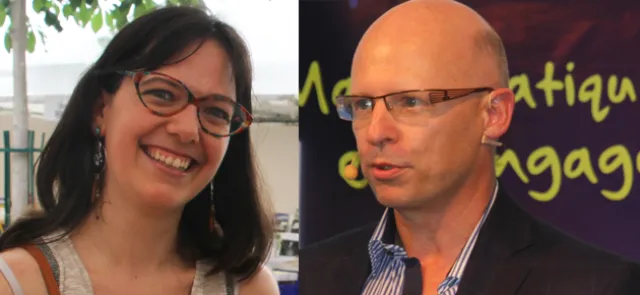
The construction of mental images in abstraction | Tangente
Can we speak of abstraction in concrete terms? The question deserves asking, since in everyday language "abstract" and "concrete" are often taken to be opposites. In reality, things are more subtle. What if abstraction were nothing but an illusion?
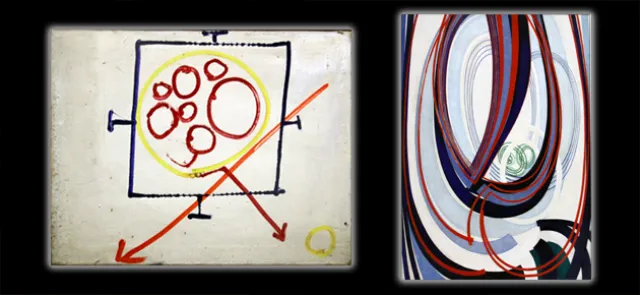
Maurice Fréchet: to axiomatize or de-axiomatize | Tangente
The French mathematician Maurice Fréchet distinguished two types of researchers. Some work essentially in an abstract manner, while others are concerned with experimentally verifying the predictions that their mathematical approach leads them to.
From "concrete" algebra to "abstract" algebra
In the twenty-first century, the idea of "concrete" algebra seems paradoxical: for everyone—high school students, university students, and teachers alike—this discipline is essentially abstract, devoted to the study of structures (groups, rings, fields, modules, possibly ordered sets…). This was not always the case.

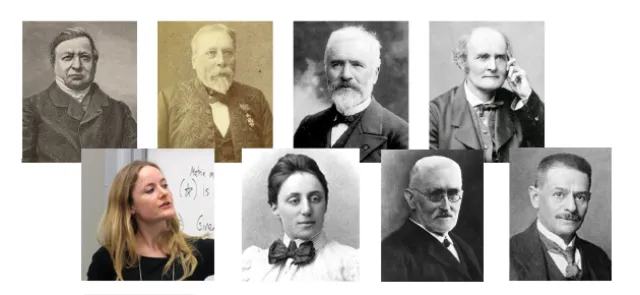
Pioneers of mathematical abstraction | Tangente
Meet some of the pioneers of abstraction in mathematics.
Category theory: an abstract nonsense? | Tangente
The essence of modern mathematics is abstraction, especially since the 1930s with the emergence of the concept of structure. But as early as the 1940s a new concept appeared: categories, accompanied by the ideas of functor and natural transformation.

Alexandre Grothendieck's visionary method | Tangente
Alexandre Grothendieck (see our feature in Tangente 162, 2015) left an indelible mark on 20th-century mathematics.

An abstract concept: filters
The concept of a filter, developed by the French mathematician Henri Cartan (1904–2008) and anticipated by the Polish mathematician Alfred Tarski (1901–1983), can be regarded as a generalization of the notion of the limit of a sequence of real numbers.
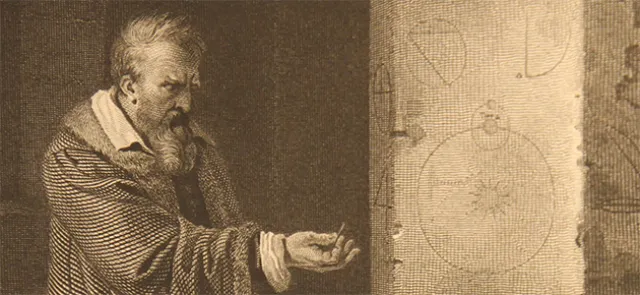
Mathematics and existence: philosophy of number | Tangente
Since mathematics aims at a knowledge stripped of any reference to sensible reality, nothing would seem more opposed than mathematics and existence. How, then, could mathematics express the singularity of what is? This question prompted a great deal of reflection between the seventeenth and twentieth centuries.