Folders
Discover how great mathematicians shaped our world, explore the links between math and other fields like art, music, or even philosophy, and relive the key moments that marked its evolution.

Analysis to rank
Improve, gain a little here, avoid losing too much there, optimize… all of this falls under the purview of analysis! If geometric intuition helps us compare, it is mathematical analysis that will allow us to quantify variations and thus to bound from above or below many expressions. Among the stars of the field, we find the arithmetic-geometric mean inequality, well known to high school students, and the Cauchy–Schwarz inequality, more advanced but of formidable power.


Applications and curiosities
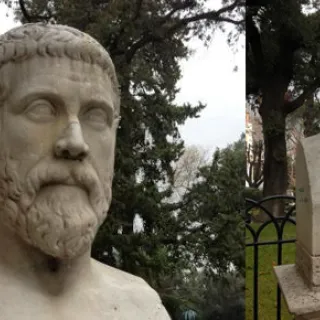
It would be quite reductive to think that iterative processes only contribute to solving mathematics or computer science problems. The idea of iterating a process is part of our daily life! Pythagoras himself followed an iterative process (the repetition of an interval, the fifth) to construct the notes of the musical scale, a scale used for centuries. The connections with music don't stop there. Two thousand five hundred years later, the notion of iteration creeps in, to the great delight of our ears, into modern composition techniques. Minimalist music, prime numbers... all inspirations are welcome. These recursive mise en abyme can even inspire writers and artists, or give rise to particularly aesthetic self-referential constructions. Indeed, even the most abstract mathematics invites itself everywhere to amaze us!


Approaching the best
While it is often possible to theoretically demonstrate the existence of an optimal solution to a given problem, an explicit and complete form of this solution is more difficult to obtain outside of a few textbook cases. It is therefore necessary to settle for calculating an estimate of it using algorithms. Examples are numerous, both in a "psychological" context (optimization of collective well-being using the Pareto model) and in physics. Thus, when the quantity to be optimized varies like a fluid, clever procedures can reach the precious minimum or maximum, provided care is taken not to remain stuck in a local pocket: it is the global optimum that is sought!


Approximately
A calculation does not always have to be exact, so mental calculation doesn't either. To go fast without getting lost in unnecessary precision, one can therefore develop approximate mental calculation techniques. These are not limited to the occasional replacement of a number with a simpler number. From logarithms to square roots, once the path of approximation is chosen, a whole set of new techniques can unfold to allow one to evaluate the result of certain problems mentally.

Approximation of curves and functions
The importance and omnipresence of digital technology has led to the redefinition of entire fields of mathematics. While approximation once reflected limitations in mathematical knowledge or the capabilities of human calculators, in computers everything is, in fact, approximated: numbers, images, sounds and even functions, treated as sequences of elementary operations. From data collection to their processing and representations, many techniques are regularly developed. Some problems then become crucial: the bounding of the error that propagates from one step to another in a calculation, the stability of the models used which must avoid sudden qualitative "jumps", the simplicity of implementation of algorithms… Behind all these questions hide theorems studied nearly two centuries ago, and methods extended and amplified with the development of digital technologies.

Area calculations
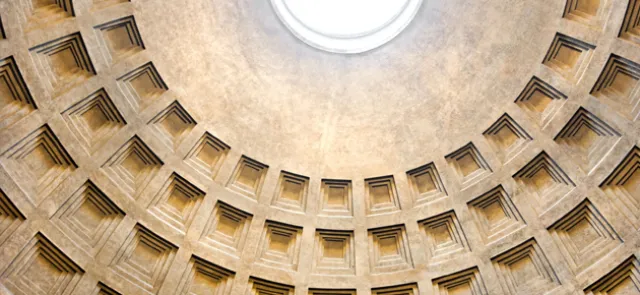
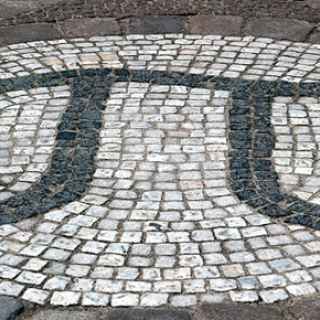
It was originally called 'surface', the same name as what it measured… The area of plane figures had to be calculated long ago for reasons rooted in reality! Sharing a field equitably, subjecting a domain to the fairest possible tax require precise and uncontestable calculations. During Antiquity, Egyptians and Greeks proceeded by successive approximations, a long and tedious method, especially when this elusive number that we call π today comes into play. It will take several centuries for scientists to establish integral calculus, which in practice solves all the cases one may encounter, from the area of a corn field to that swept by a planet during its revolution around the sun.

Artificial Players
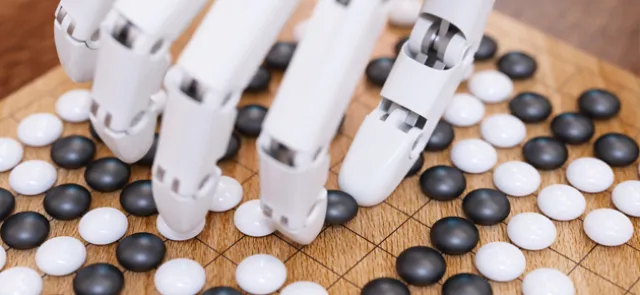
Whether they are games of strategy or chance, games are a privileged training ground for algorithms. Illustration of the irresistible march of computer science progress, the recent victory of a computer over a human champion at the game of go should not, however, deceive: the challenge is not merely to make the machine win, but above all to explore new avenues. It is with this logic that a private laboratory relies on bridge to develop an artificial intelligence capable not only of winning, but above all of explaining what it does. An approach that brings back into the spotlight the simulation of human behavior, neglected in recent years in favor of the exploitation of massive data.
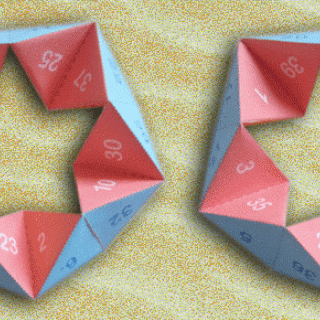
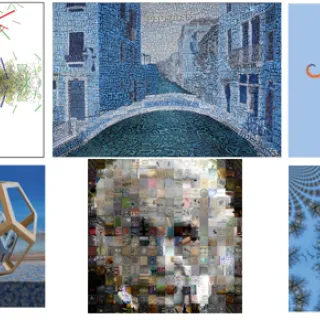
Artistic supplement
Astrology
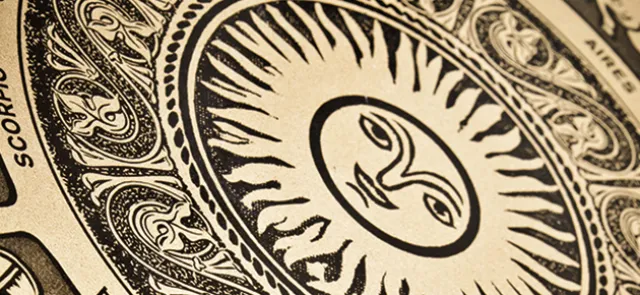
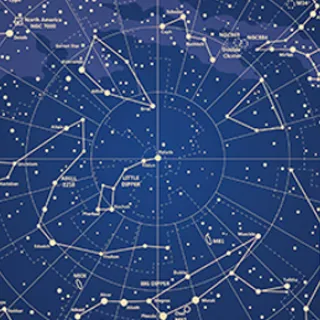
Appeared with the Babylonians, highly developed in Antiquity but also during the Renaissance, astrology long tempted astronomers and mathematicians when the origin of gravitational forces was unknown. Although sometimes based on learned calculations, we now know it has no theoretical foundation and is based on astronomical considerations that are most often erroneous… Classified today by scientists as an obscurantist discipline, it still attracts numerous followers. Why? This is undoubtedly the domain of psychology and… probabilities. Because its only art is to make one believe in the reality of its affirmations.

At the confluence of algorithmics and modeling
A million-dollar problem: finding a solution, is it as easy as verifying it? Written in the form 'P = NP?', this problem remains open for now. Thus, showing that a schedule satisfies the imposed constraints is easy, but finding one that works? If one must enumerate them one by one to test them, one risks spending more time than the age of the Sun, whereas we would like to have the solution in five minutes or twenty-four hours. We first seek to identify problems that we know how to solve quickly. For the others, we will use if possible intelligent tree searches, efficient exact algorithms of the combinatorial path-finding type, or approximate methods (metaheuristics).