



Approximation of curves and functions
The importance and omnipresence of digital technology has led to the redefinition of entire fields of mathematics. While approximation once reflected limitations in mathematical knowledge or the capabilities of human calculators, in computers everything is, in fact, approximated: numbers, images, sounds and even functions, treated as sequences of elementary operations. From data collection to their processing and representations, many techniques are regularly developed. Some problems then become crucial: the bounding of the error that propagates from one step to another in a calculation, the stability of the models used which must avoid sudden qualitative "jumps", the simplicity of implementation of algorithms… Behind all these questions hide theorems studied nearly two centuries ago, and methods extended and amplified with the development of digital technologies.
All articles in this folder

Approximation theory
When we do not know how to determine models or shapes directly, we approximate them using functions or curves that are easier to handle while preserving their main properties. This is the subject of approximation theory.

Approximating the paths of celestial bodies | Tangente
The word planet comes from a Greek word meaning "wandering star." This etymology suggests that the motion of the planets—which for the Greeks included the Moon and the Sun—is difficult to define and seems to defy all logic.
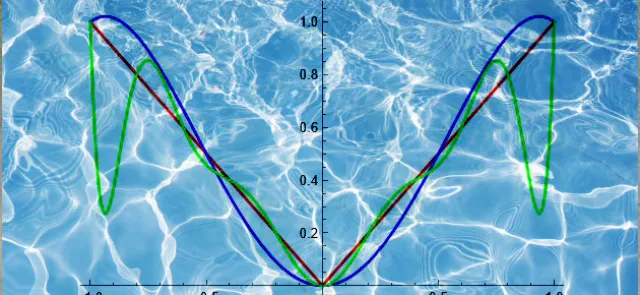
Approximating functions: not so simple...
When we want to get closer to an object, we try to reduce the distance between us and it. The same applies when "approximating" a function. But matters become more complicated because there are several notions of distance.
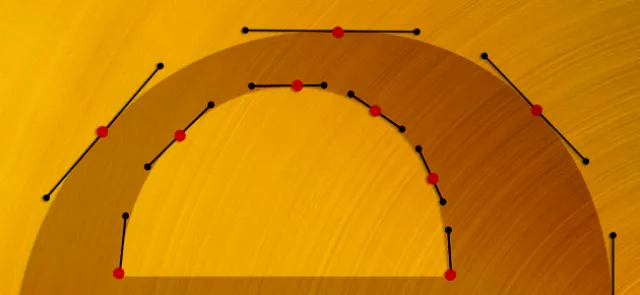
Bézier curves in modeling | Tangente
Bézier curves are particularly common in computer-aided design and can be generated easily from a small number of points that completely determine them.
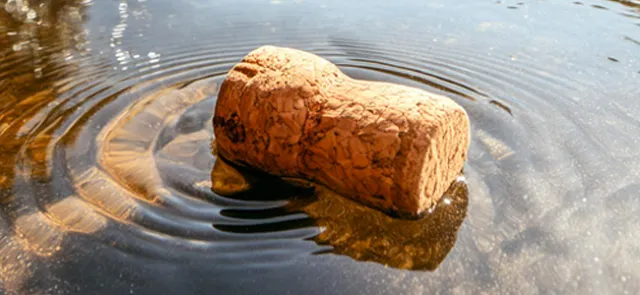
A cork on the river | Tangente
Set a cork adrift on the surface of a river. When its path is too difficult to calculate, approximation methods are the only option. Sometimes, however, the way the water flows makes the reliability of such methods problematic.

The origins of pifometry | Tangente
The ancients used units based on human abilities or physical characteristics: the length of a thumb or foot, the handspan, the cubit, the fathom...

A (good) Babylonian approximation
The Babylonians have always been renowned as brilliant mathematicians, and the clay tablets that have survived sometimes bear dazzling witness to their skill.