Some units were inevitably quite variable, particularly when they referred to activities: the journal, for example—the area a farm labourer could mow in one day—varied between mountainous and lowland regions.
According to Alain Rey, the French word pifométrie first appeared in 1928. The Système d’unités pifométriques, published by the Union de normalisation de la mécanique, states that "everyone comes into the world with their own built-in pifometer. This trait, known as pifogenesis, stems from the inheritance of acquired characteristics and explains why the pifometric system, universal though it is, remains susceptible to influences"—intellectual, social, professional and cultural.
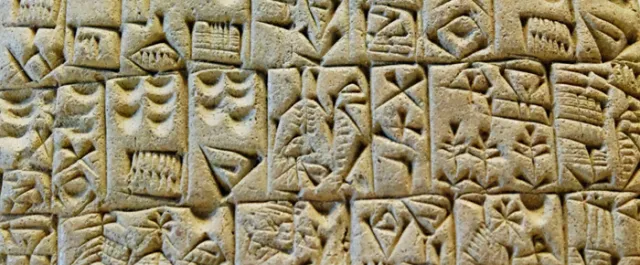
Pifometry and its various units are commonly found in the Bible and other ancient texts, in which, for want of a fixed numeral system, the names given to large numbers were left to individual narrators. The Hebrews’ countless throngs and hosts are every bit as pifometric as the Incas’ moons, Greek hecatombs or Roman decimations.
In John’s Gospel, we find the words "...15 stadia, that is, about half an hour’s walk" (11:8), from which we can infer that the stadion (one lap of the track) measured between 166 and 200 metres.
The following, more famous quotation comes from the Old Testament: "He made the molten sea. It was ten cubits from rim to rim, completely round in shape, five cubits high, and thirty cubits in circumference, as measured by a cord." (Kings, 7:23). This passage gives the approximation π = 3, which is quite acceptable.