The golden ratio—this "jewel of geometry," as Kepler called it—seems to be everywhere, from geometric constructions to the proportions of masterpieces and the aesthetic standards applied to buildings. Where did this enthusiasm come from, and how widely has the number really been used, particularly in architecture?
In ancient times
----------------
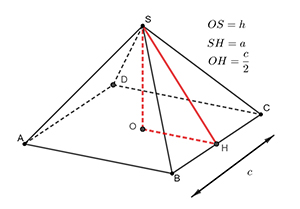
Long before the Greeks gave the golden ratio "official" status, our ancestors knew how to divide a circle empirically into five equal parts and then make approximate constructions of regular pentagons or dodecagons, each involving φ. Beyond these plane constructions, some claim that this mythical number also appears in certain monuments. One such monument is the Great Pyramid of Giza, built around 2560 BCE. The Greek historian Herodotus (c. 480 BCE–c. 425 BCE) may have recounted what Egyptian priests were said to have told him about its construction: its proportions were supposedly such that the square on its height had the same area as one of its triangular faces.