



Area calculations
It was originally called 'surface', the same name as what it measured… The area of plane figures had to be calculated long ago for reasons rooted in reality! Sharing a field equitably, subjecting a domain to the fairest possible tax require precise and uncontestable calculations. During Antiquity, Egyptians and Greeks proceeded by successive approximations, a long and tedious method, especially when this elusive number that we call π today comes into play. It will take several centuries for scientists to establish integral calculus, which in practice solves all the cases one may encounter, from the area of a corn field to that swept by a planet during its revolution around the sun.
All articles in this folder
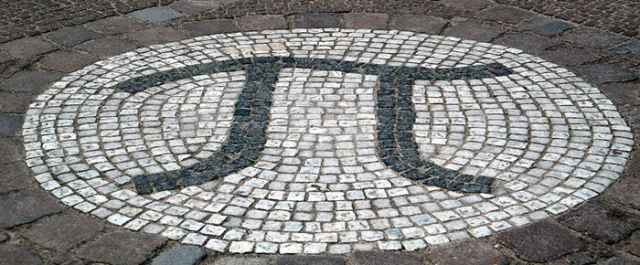
Approximately π
We can play with areas to calculate π, but we can also start with π and choose areas accordingly. For a change from Archimedes' famous method of exhaustion, we can revive a historical approach probably devised by the Egyptians... Can you do better?

Area briefs
Discover different ways to calculate the areas of polygons
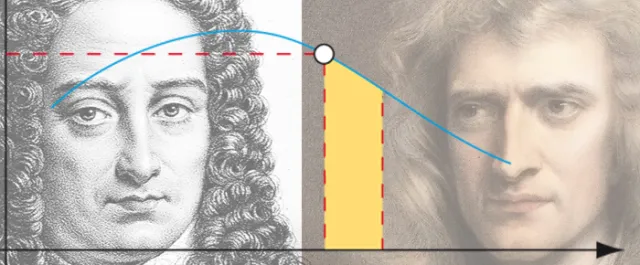
Areas and antiderivatives: a close connection
Areas and antiderivatives have been linked ever since the foundational work of Leibniz and Newton in the 17th century. This connection has simplified the calculation of the areas of many regions in the plane, but the relationship between area and the integral goes far deeper than this computational question.
The value of polar coordinates
Using integral calculus to calculate areas can sometimes be cumbersome in Cartesian coordinates. Switching to polar coordinates can then be a considerable help. It also makes it possible to normalize the normal distribution in probability.

Kepler's law of equal areas
It is number two on the list of Kepler's laws, yet it is the easiest to prove. The law of equal areas is one of three results by the German astronomer who revolutionized our view of the heavens at the dawn of the 17th century.