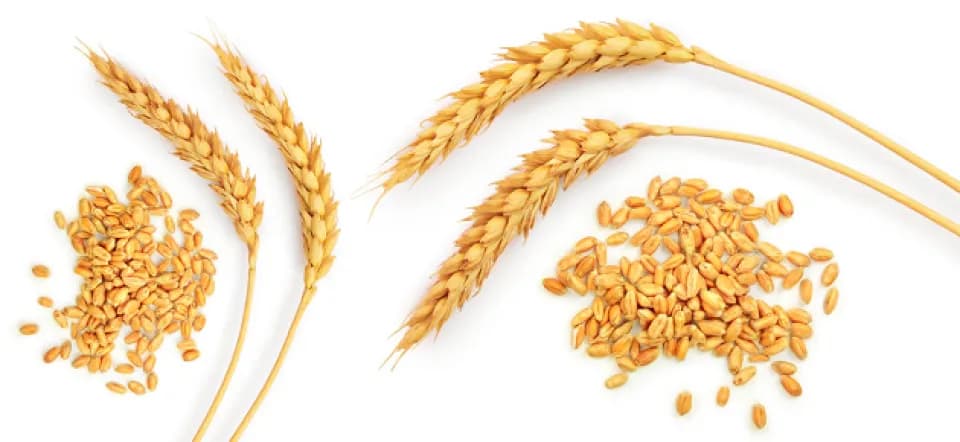
Here is a classic exercise that can be tackled at different stages of education: how many grains of wheat do we get by placing one grain on the 1st square of a chessboard, two on the 2nd, four on the 3rd, eight on the 4th, and so on, doubling the number of grains up to the 64th and final square?
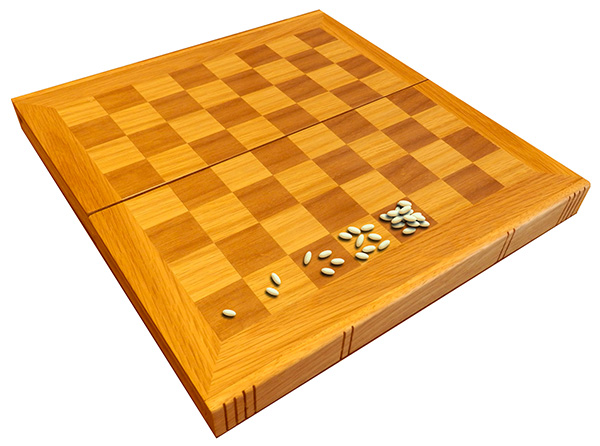
This puzzle, which may have originated in Persia, has a history stretching back more than a thousand years and comes in countless versions. From a purely mathematical standpoint, its most fascinating feature is the enormity of the answer: 18,446,744,073,709,551,615. Try saying it aloud on your first attempt without hesitating!
The number of digits in the final answer means that mental arithmetic alone cannot produce it, unless you are a calculating prodigy. Yet it is possible to work out an extremely good approximation in your head—one that shows that, no, large numbers are not beyond our reach.
Tackling the sum
---------------------