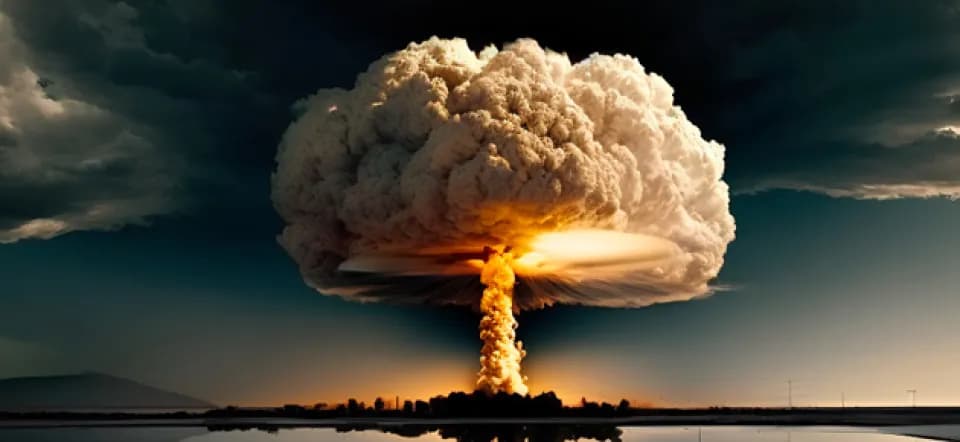
New Mexico, July 16, 1945. An explosion could be heard for dozens of kilometres around, an intensely bright flash dazzled the entire surrounding landscape, and a vast mushroom cloud formed in the sky: the US armed forces had just conducted the first test of a nuclear weapon as part of the Manhattan Project. The historical significance of that moment is well known, of course, and its repercussions can still be felt in today's geopolitics.
Developing the bomb brought together many leading scientists, each of whom offered a prediction of the energy released by the explosion: from Robert Oppenheimer's 300 tonnes of TNT to Edward Teller's 45,000. According to the story, Enrico
Fermi tore up a few small pieces of paper and, using the distance they traveled in the blast, estimated the yield at 10,000 tonnes of TNT. Measurements gave a figure of around 18,600 tonnes of TNT, showing that Fermi's approach was not bad at all for a rough calculation based on watching scraps of paper fly.
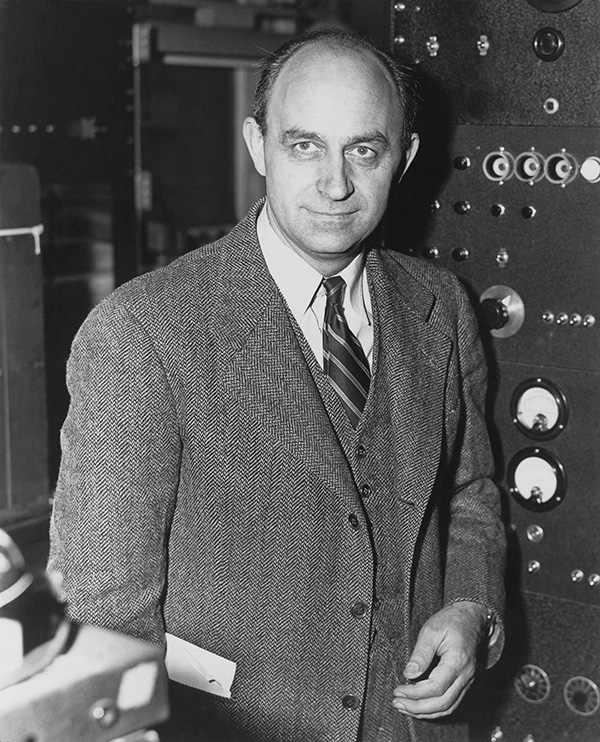
Enrico Fermi (1901–1954).
Estimation problems**
----------------------------