In 1490, the Tuscan Franciscan friar Luca Pacioli (c. 1447–1515) wrote an important compendium of the mathematical knowledge of his time: the Summa on arithmetic, geometry, proportions and proportionality. In what was still an innovation at the time, it was written not in Latin but in vernacular Italian (its original title was Summa de arithmetica geometria proportioni et propotionalita).
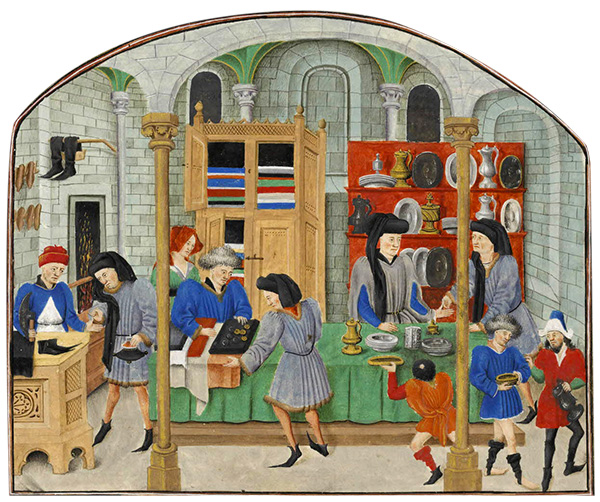
At the Champagne fairs, around 1455.
Illustration from Book IX of the Nicomachean Ethics.
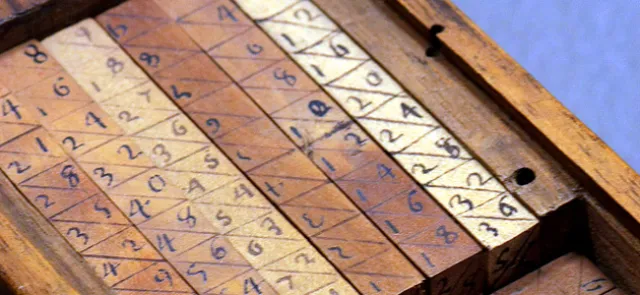
One of the oldest printed mathematical treatises, this book is an invaluable source on Renaissance mathematics, as well as on more practical techniques intended for merchants and accountants, such as the contemporary method of setting out multiplication (known as per gelosia, and somewhat different from ours: see the article "Napier's rods"). It also contains many applications of mathematics to commerce, including the "rule of 72", a simple way to make approximate calculations of how capital grows at a predetermined interest rate.