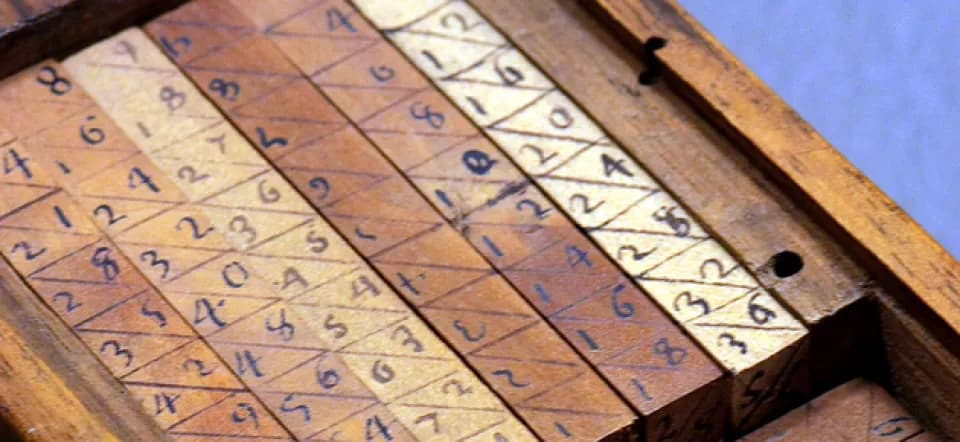
John Napier is best known for inventing logarithms (see the article "Logarithms to the rescue"), but they were not his only contribution to the art of calculation. We also owe him the "rods" that bear his name and greatly speed up the algorithm used in his day to multiply numbers.
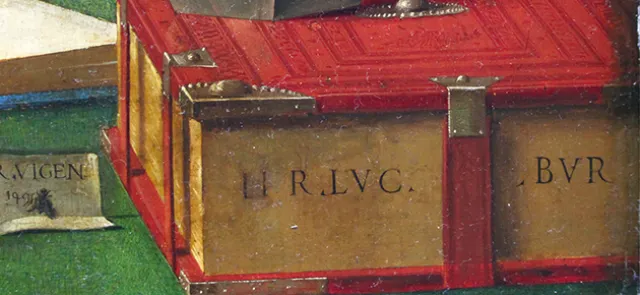
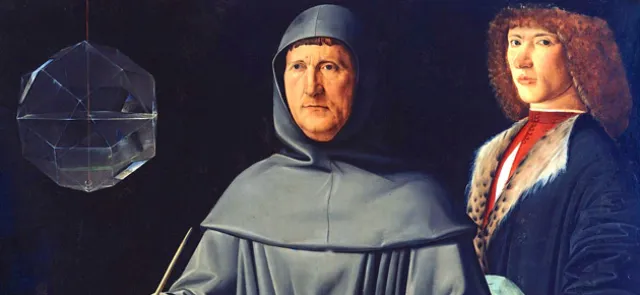
To understand Napier's innovation, we need to know that in the 16th century, multiplication was commonly performed using the method known as per gelosia ("by latticework"). The name came from the shape of the grid used, which resembled the jalousies, or louvered shutters, found in Venice, where Luca Pacioli (c. 1447–1517) lived. He described the method in his bestseller, the Summa de Arithmetica geometria proportioni et proportionalita. The book brought together all the mathematical knowledge of the period, at a time when Hindu-Arabic numerals had not been accepted in Europe for very long and people still had to be taught how to use them. In a famous painting (reproduced in the article "The rule of 72"), Pacioli is shown resting his hand on a copy of the book.
Lattice multiplication
----------------------------
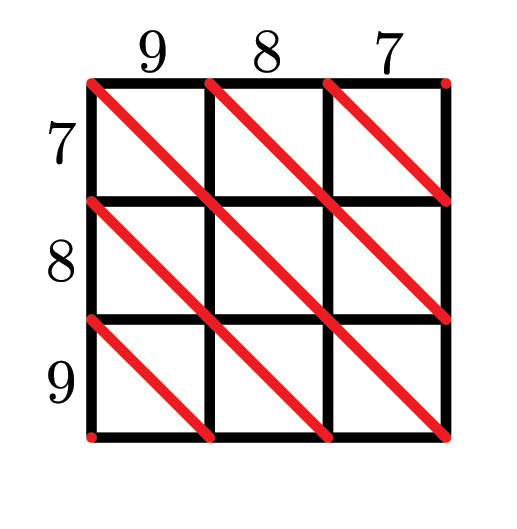
As an example of his method, Luca Pacioli explains how to multiply 987 by 987. First, draw a three-by-three square grid, add the "jalousies" (the red lines here), and position the digits of the two numbers as shown.