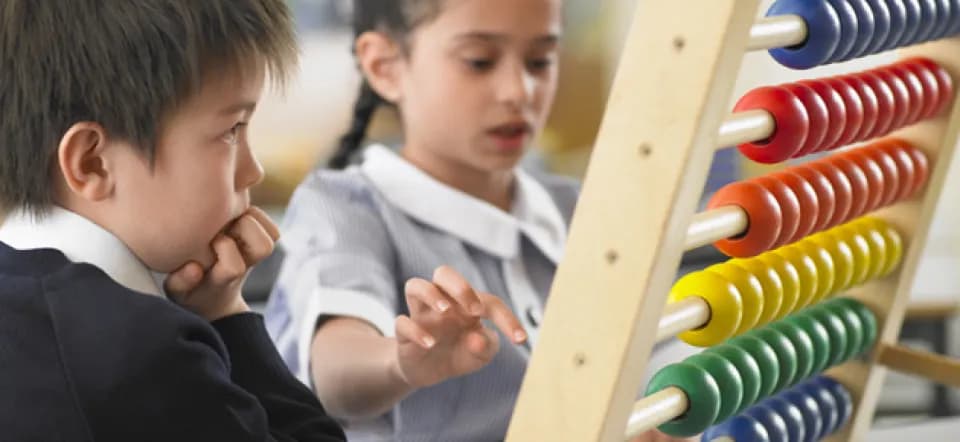
Japan, a civilization where tradition and modernity are closely intertwined, is the country of calculators as much as of abacuses, to the point that even in this age of triumphant computing, experts in the soroban (the Japanese abacus) remain as highly regarded as ever.
Even in the late 20th century, long after calculators—particularly Japanese ones—had become commonplace, one could still marvel at finding, amid Tokyo's digital modernity, that the humblest shops as well as bank branches continued to use the soroban to calculate exchange rates or make change. The staff could send the beads flying at prodigious speed, and some Japanese cashiers still use it today.
Although computers and smartphone apps ultimately prevailed, using the soroban is still considered an art. As in judo, learners progress through the equivalent of belts (kyu) and then dan ranks. An expert can perform any arithmetic operation on numbers with more digits than a standard calculator can handle—at least fifteen—and often do so faster, if only because entering the numbers takes time.
Training begins in early childhood: every year, one million Japanese schoolchildren learn the soroban, which is taught from primary school through nursery rhymes. It allows students to visualize base-ten arithmetic easily and operate the abacus with two fingers. On reaching first kyu (the highest level), a student can multiply a seven-digit number by a four-digit number in under three seconds.
Calculation competitions
-----------------------