At a conference of the French Association for the Advancement of Science, Édouard Lucas (1842–1891) wondered whether Napier's rods could be improved so that multiplication results could be read from them directly. With his deep knowledge of arithmetic, he sensed that since the carries were known and fixed, something could be done. Henri Genaille (1856–1903), "an engineer with the state railways in Tours, obscure yesterday, illustrious tomorrow", as Lucas put it, found the solution. The rulers invented by Genaille were undoubtedly improved by Lucas, which is why they now bear both their names.
They were presented in 1884 at the 7th conference of the French Association for the Advancement of Science in Blois.
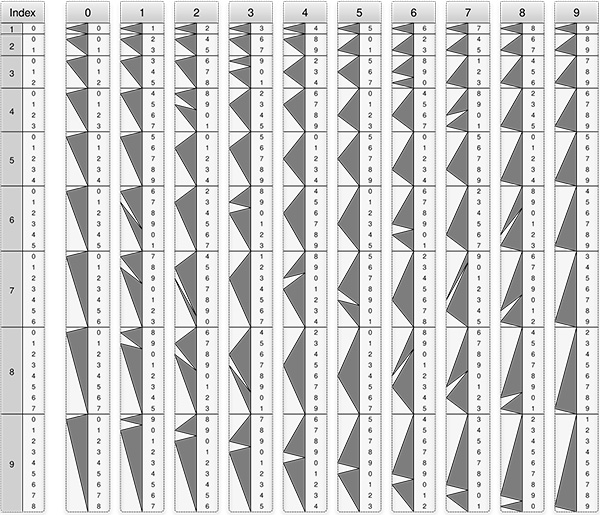
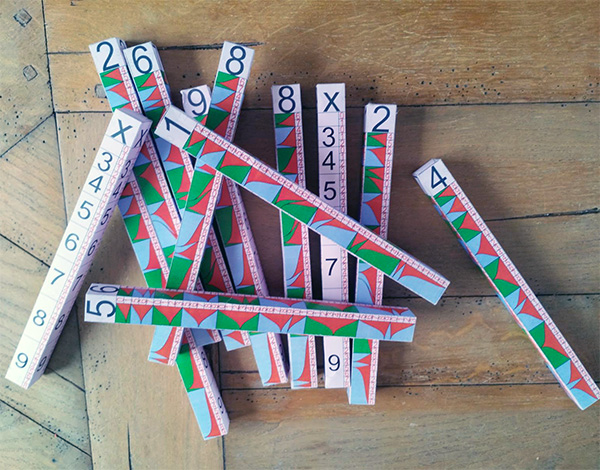
A complete set of Genaille–Lucas multiplication rulers.