



Complexes, trigonometry and analysis
Complex numbers totally revolutionized analysis: by allowing the variable of a humble real function to take values in ℂ, Leonhard Euler and especially Bernhard Riemann opened a Pandora's box whose richness no one could have imagined. The exponential finally flourished, and with it all of trigonometry, whose formulas become accessible to everyone! Such that domains of physics, like electrical engineering, can no longer do without it. The zeta function now makes us gaze at a thousand mathematical wonders, especially regarding prime numbers, the elementary building blocks of arithmetic. But beware the rash soul who ventures into the Riemann hypothesis: the million-dollar reward promised for its proof alone speaks to the immense scale and formidable challenge of the task…
All articles in this folder
Complex numbers and trigonometry
The link between the exponential function and the familiar trigonometric functions is well known to anyone who has studied mathematics. Less well known is that this relationship extends to hyperbolic functions, which are useful in electrical engineering!

The complex exponential
How can the classical exponential function be extended to complex numbers? Will its usual properties be preserved? Although the resulting extension is easy to study, the associated notion of a complex logarithm is more elusive. It was the subject of controversy in the 18th century.
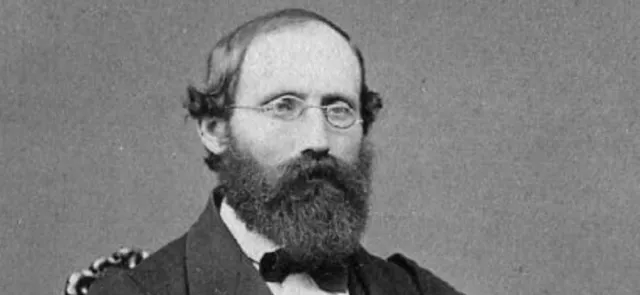
The zeta function and the Riemann hypothesis
The most important problem in contemporary mathematics can be stated in entirely elementary terms, requiring only a rudimentary knowledge of complex analysis. Despite mathematicians' titanic efforts, the Riemann hypothesis remains stubbornly out of reach.