



Congruences
The idea of grouping integers according to the remainder of their division by a given number is as old as arithmetic. From the "Chinese remainder theorem", inherited from ancient China and studied up to the 13th century, to that of Fermat, the field would see many advances, until the arrival of Gauss, who would formalize the notion of "congruence" and sign the birth certificate of modular arithmetic. This new and powerful vision of numbers, which allows encompassing the infinity of integers in a finite model, also applies to concrete domains: the proof by nine, calendar cycles, security codes... It is also found in music and produces some nice curiosities, such as certain magic tricks.
All articles in this folder
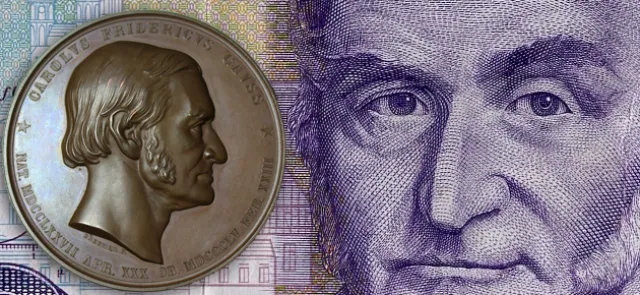
A history of modular arithmetic
The idea of working with the remainders obtained when numbers are divided by certain integers, rather than with the numbers themselves, gradually gained ground. Gauss formalized the idea with his notion of congruence, giving rise to modern modular arithmetic. Congruences have quite a history!

Divisibility without calculations
We cannot forget them: they are ingrained in our memories from elementary and high school—but is that really certain? Do we still remember all those divisibility tests our mathematics teachers drummed into us so often?

An incongruous little tour through the world of congruences
Cooks have long known that making the most of leftovers is an art. The same is true in mathematics, where congruence is a remarkably rich concept. This notion has applications ranging from everyday life to highly theoretical settings.
The Chinese remainder theorem
The periodic nature of planetary revolutions naturally gives rise to the notion of congruence. The earliest surviving written problem on this theme is known as the Chinese remainder theorem. Its universality has led to many fundamental applications in the theory of numbers and polynomials.
Number magic and self-working tricks | Tangente
Nowhere are congruences more vivid, striking or spectacular than in self-working magic tricks. Though "swept under the rug," they are there, guaranteeing the performer success. The audience can only marvel at the effect... and suspect that the magic of numbers is at work.
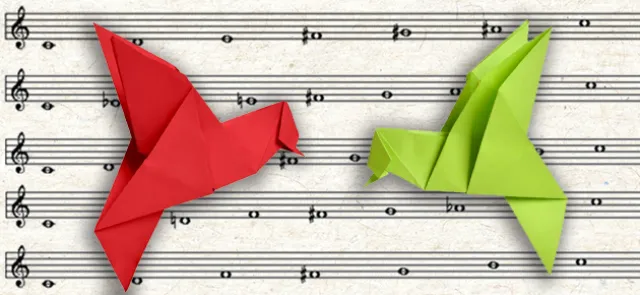
Olivier Messiaen: music and congruences
Mathematics and music were intertwined for centuries before gradually going their separate ways. Yet many composers remain attached to the language of numbers. Olivier Messiaen is a notable example: congruences play a part in the construction of his modes.