A road in the fog — and two ways of seeing it
Picture a mountain road at night. The fog thickens. A human driver squints, adjusts their gaze, and keeps making out the taillights of the vehicle ahead. An autonomous driving AI system, on the other hand, can literally lose sight of the road. Not because it lacks data or computing power — but because it is missing something more fundamental: a mechanism the human brain has perfected over millions of years of evolution.
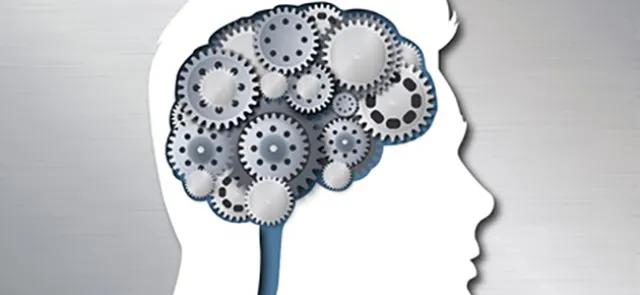
This is the starting point of research conducted at the University of Valencia by Pablo Hernández Cámara and their team. Their idea: rather than training an AI on millions of images of fog, rain, and night — an endless race — directly import the biological mechanism that makes the human brain so robust into the artificial network. The result, published in Neurocomputing, exceeds a 20% improvement in unfavorable conditions. But to understand why, we first need to get into the mechanics of vision.
The problem with AI systems that see too well in clear weather
Modern artificial vision systems — the ones that let a self-driving car recognize a pedestrian, a sign or a red light — are deep neural networks. In plain terms: stacks of mathematical layers that learn to associate visual patterns with categories. Trained on thousands of well-lit images, they become formidably accurate. In clear weather, such a system can outperform the human eye.
The problem is that this precision is fragile. When light levels drop, when a veil of fog dulls contrasts, when rain creates stray reflections, the numerical values the network has learned to recognize change abruptly. The network no longer sees what it learned to see. It doesn't adapt — it gets it wrong. A human driver, by contrast, doesn't have this problem. Why?
The visual cortex's "volume control"
The answer comes down to two words: divisive normalization. This mechanism, described as a canonical neural computation by neuroscientists Matteo Carandini and David J. Heeger in a review published in Nature Reviews Neuroscience, is present in many sensory systems. Its principle is elegantly simple.
In the visual cortex, no neuron works alone. Its response is constantly weighed against the activity of its neighbors. Mathematically, this amounts to dividing a neuron's signal by a weighted sum of the surrounding signals. The numerator is what the neuron sees locally. The denominator is the surrounding context. The result: if the whole neighborhood is dark, the neuron amplifies its signal to bring out the details. If everything is glaring, it dampens the signal to avoid saturation. This is exactly an automatic volume control — the one Hernández Cámara describes this way: "the brain turns down the volume to avoid being dazzled."
This mechanism is not a laboratory curiosity. As neuroscientist David J. Heeger showed as early as the early 1990s — in a foundational paper on the cat's striate cortex, now referenced by the NASA Technical Reports Server — visual cells inhibit each other to normalize their responses relative to the stimulus contrast. This is not a detail of physiology: it is the mechanism that lets the visual system operate across several decades of luminance, from moonlight to direct sunlight.
Artificial neural networks, meanwhile, have gradually abandoned this biological inspiration in favor of speed and accuracy in ideal conditions. A short-term gain, a long-term fragility.
Grafting the biological mechanism onto an artificial network
The Valencia team therefore did the reverse. They took deep neural network architectures commonly used for semantic segmentation — the task of labeling every pixel in an image ("car", "road", "pedestrian") — and added layers that simulate divisive normalization. In practice, the artificial neurons are forced to communicate with their neighbors and adjust their activations based on local context. Exactly as biological neurons do.
To test the robustness of the system, the researchers subjected both versions — classic and bio-inspired — to a battery of tests: real-world driving datasets from European cities, nighttime driving images from Switzerland, and virtual driving simulators. The perturbations applied to the images systematically covered several visual dimensions: luminance, achromatic contrast, chromatic contrast, and changes in spectral illumination. These datasets, including the IPL-Cityscapes-LuminanceContrasts and IPL-CARLA-dataset sets, are publicly available on Hugging Face, which allows other teams to reproduce and extend the experiments.
The experimental logic is mathematically clean: fix the training conditions, vary a visual dimension in a controlled way, and measure the stability of the output. If the model is truly robust, its segmentation should not collapse when luminance drops by a factor of two. This is precisely what the study measures — and what the bio-inspired model succeeds at where the classic model fails.
More than a 20% gap — and an explanation that holds up
The results are clear-cut. Under normal conditions, the two systems are on par. But as soon as fog thickens or night falls, the gap widens: the bio-inspired system delivers performance more than 20% higher than its classic counterpart, according to the results published in Neurocomputing. And this is not a black box producing this result by accident — the researchers analyzed the network's internal representations and confirmed that it did amplify the details of vehicles hidden in the haze, where the standard model let them disappear.
This point is worth dwelling on. In machine learning, it is common to obtain a performance gain without understanding why. Here, the gain is explained by two measurable mechanisms: increased invariance of internal representations to perturbations, and an adaptive non-linearity that depends on local activity. This is precisely what Carandini and Heeger had predicted for biological systems. It all comes full circle.
For Hernández Cámara, the lesson goes beyond autonomous driving: "Nature has already solved some of the problems artificial intelligence faces today. We just need to learn from it." This is not an argument against computing power — it is an argument for structure. Sometimes the right mathematical operation is worth more than a billion additional examples.
Key takeaways
The division that stabilizes everything: what divisive normalization really does
To go one step further into the mechanics, here is what the operation actually does inside a neural network.
Let ri be the raw response of a neuron (or a filter, in an artificial network) to a local stimulus. Without normalization, this value is passed unchanged to the next layer. With divisive normalization, the effective response becomes:
ŷi = rin / (σn + Σj wij · rjn)
where the sum in the denominator runs over a neighborhood of neurons j, weighted by coefficients wij, and where σ is a threshold parameter that prevents division by zero. The exponent n (often equal to 2) introduces a non-linearity that makes the mechanism sensitive to local activity levels.
What this formula produces is geometrically interesting. Without normalization, the activations of a vision network are strongly correlated with one another: if global luminance increases, all the neurons respond more strongly together. With normalization, each response is put in context by its neighbors — which tends to make the components of the signal more statistically independent. Computational neuroscientists Odelia Schwartz and Eero P. Simoncelli showed, in a paper published in Nature Neuroscience, that "the resulting responses are significantly more independent" — which corresponds to a reduction in redundancy in the representation.
For autonomous driving, this translates directly: when global luminance drops (night, fog), the denominator drops too, and the neurons' responses stay within a usable range. The network doesn't "see" less — it automatically recalibrates its reference scale. It is this measurable invariance property, quantified in the Neurocomputing study on the IPL-Cityscapes-LuminanceContrasts sets, that explains the gains observed in extreme conditions.
What this research ultimately highlights is that deep neural networks are not brains — but that they can borrow precise mathematical operations from biology, whose effects are measurable and interpretable. Not a metaphor. An equation.