

At the heart of his century
In this city of Paris, which could then claim the status of intellectual capital of Europe, Cauchy was the scientific pivot of his entire generation. Cauchy's glory was however nothing like a long tranquil river. Born in 1789, he was confronted with the great upheavals that swept through France for decades and saw regimes and revolutions chain one after another. If no one in his time truly contested Cauchy's scientific domination, his genius did not always protect him from the hazards of the era. His sometimes intransigent firmness on political and religious matters worked against him, giving him the image of a rigid man even as his charitable works also earned him great respect.
All articles in this folder
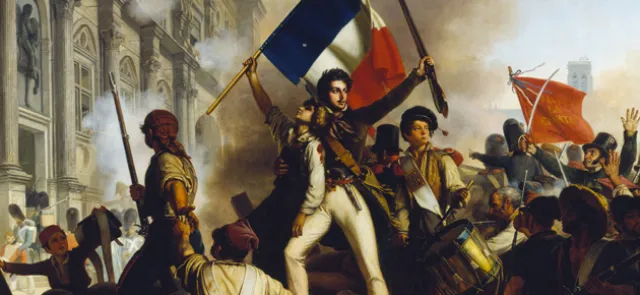
Cauchy: A man of contradictions | Tangente
Cauchy's teaching and research left a profound mark on the history of mathematics. Yet both his work and personality were full of contradictions and did not always meet with universal approval.
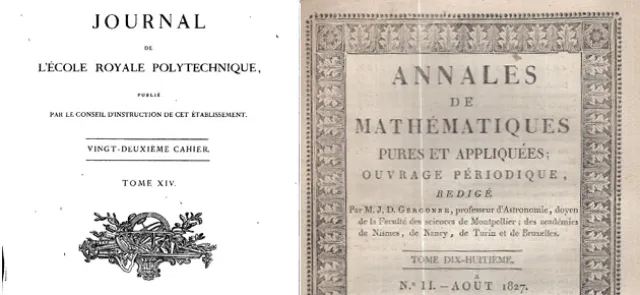
Cauchy and the rise of mathematical journals | Tangente
As the press expanded dramatically in the 19th century, advances in science prompted the creation of new publications devoted to scientific research.
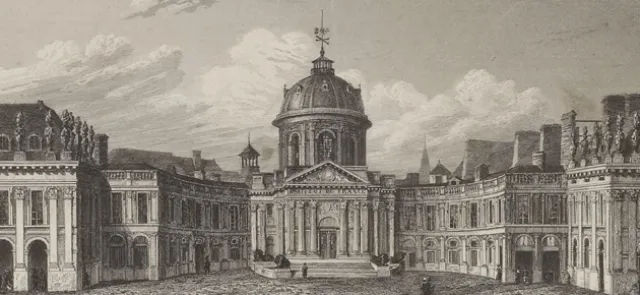
Cauchy: Conviction, maths and politics | Tangente
Cauchy's century was a veritable political laboratory: France passed through a succession of radically different regimes. Amid this constant change, Cauchy, a Legitimist, showed no lack of courage in defending his beliefs. Yet he remained steadfastly devoted to science, even when it meant helping regimes for which he had little sympathy.

A mathematical password: sin x in 1830 | Tangente
In their 1894 book on the slang of the École polytechnique, Albert Lévy and Gaston Pinet recount an anecdote illustrating the atmosphere that could prevail in Paris during the revolutions of 1830 and 1848.

Geometry and philology: Cauchy's limits | Tangente
The mathematician Olry Terquem's review of Cauchy's paper on polyhedra ends in a most curious fashion.

The battle over infinity: Cauchy and limits | Tangente
For more than two centuries, scholars and mathematicians debated infinitesimals: could they be handled safely, or were the paradoxes they generated insoluble? Amid this debate, Cauchy ushered analysis into the modern era while maintaining a nuanced position.