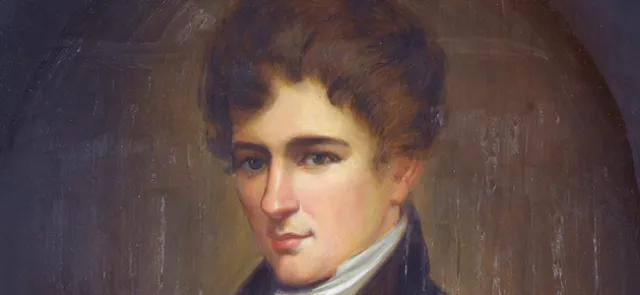
Augustin Louis Cauchy is now regarded as a model teacher at the École polytechnique. There, he put mathematical analysis on a firm and systematic footing by basing it on the concept of the limit, whose meaning he clarified. Yet Cauchy faced relentless criticism from the school's Boards of Studies and Improvement, where professors and administrators met to discuss the scientific and educational content of courses. As early as 1819, the school's director summed up the objections of physicists such as Arago and Petit, who took direct aim at Cauchy's course, writing that "in the opinion of many people qualified to express such a view, the teaching of pure mathematics is taken too far at the school, and this extravagance in a branch with applications to science is detrimental to the other branches."
The extravagance of pure mathematics
-------------------------------
In any event, Cauchy set about publishing his course in analysis, which the Board of Studies had long called for. The Cours d’analyse algébrique appeared in 1821, the Résumés des leçons sur le calcul infinitésimal in 1823, the Applications du calcul infinitésimal à la géométrie between 1826 and 1828, and finally the Leçons de calcul différentiel in 1829.
Although these groundbreaking books later served as models for modern analysis textbooks, this effort did little to silence the complaints of Cauchy's colleagues and the directors of the École polytechnique. Even the great Laplace, despite being close to Cauchy, conceded in a remark aimed directly at him that "several pages by one of the analysis professors had seemed barely intelligible to him, and he had only managed to understand them after a third reading."
Cauchy defended himself by arguing that "if some measure of rigor is sacrificed, experience will soon show that the new methods, far from hindering the students' education, allow them to learn, in less time and with less work, everything they used to learn." But his opponents did not relent, and Cauchy eventually gave way, announcing to the Board of Studies on November 24, 1825, that, in accordance with its wishes, he would no longer insist on giving perfectly rigorous proofs, as he had until then.