



Collaborative Mathematics
Mathematics is a collective work shaped over the centuries through collaborations, whether to produce knowledge or publications. But for less than a century, practices have been revolutionized. The isolated researchers of the past are increasingly being replaced by teams with varied skills, enabling new effective approaches. Massively collaborative research of results is also made possible by the Internet and instant communication tools. Pal Erdös was one of the pioneers of this movement of which the brilliant mathematician Tim Gowers is today one of the driving forces. But knowledge sharing also happens with the general public, thanks to popularization efforts and the commitment to allow free access to research articles. Collaborative free software is emerging, as are multi-author websites like Wikipedia. Large-scale knowledge sharing: the Ancients dreamed of it, our era is implementing it!
All articles in this folder
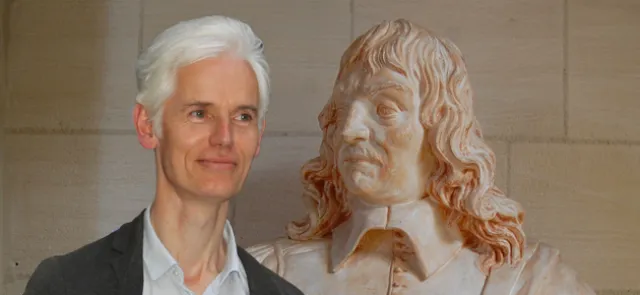
The beginnings of collaborative research | Tangente
Until very recently, mathematicians worked and published alone. Now, thanks in part to the development of modern communication tools, it is not uncommon to find research papers co-authored by more than four people. At Tim Gowers's instigation, several websites have enabled collaborative research.
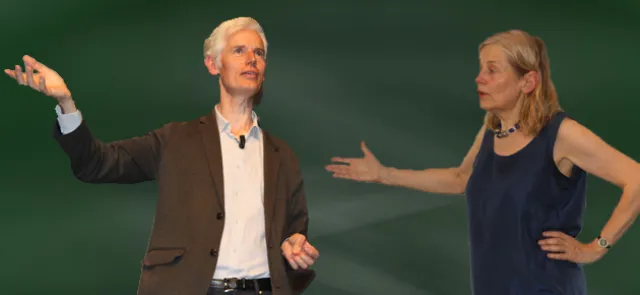
Toward open science | Tangente
Mathematical practice is undergoing profound change. Researchers are organizing, established ways of working are being questioned, and bringing knowledge to the general public has become a key concern. A new model—"open science"—is emerging.
Famous partnerships in research | Tangente
Compound theorem names offer a clue as to which pair of mathematicians worked on the subject... or perhaps not.
In publishing, they come in pairs | Tangente
The 20th century left us some striking examples of editorial partnerships in mathematics education.
Toward new practices | Tangente
Mathematical research and teaching increasingly rely on software that supports collaboration. As this software grows more complex, its development requires large-scale collaboration.
Lean: a new library of Alexandria | Tangente
Building a digital repository of mathematics—a new "Library of Alexandria for mathematics"—is the wildly ambitious collaborative undertaking on which many mathematicians have embarked.
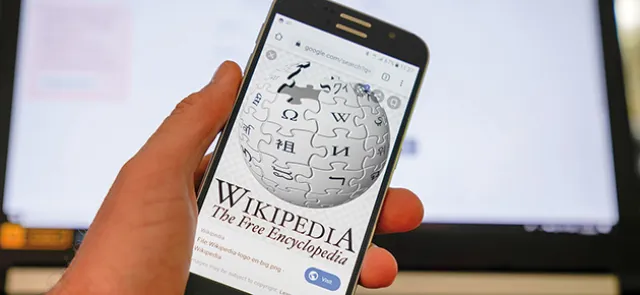
Writing a Wikipedia article—why not… | Tangente
Whenever people have a question or want to check a concept, Wikipedia has become the first port of call for many. But who writes these articles? Can they be trusted? Above all, how can you write one yourself?
Brainstorming and hackathons | Tangente
More heads are better than one. This principle underpins brainstorming and hackathons—intensive computer-programming events—both widely used in data science.