Bienaymé and Chebyshev
----------------------
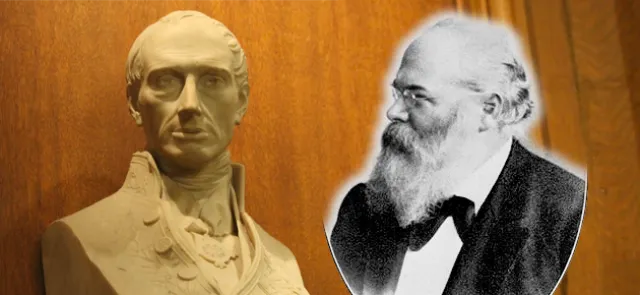
Pafnuty Lvovich Chebyshev (1821–1894), the most famous Russian mathematician of the 19th century, was not named Bienaymé, despite what some students seem to think. The names of these two mathematicians are associated with a famous inequality—and not by chance.
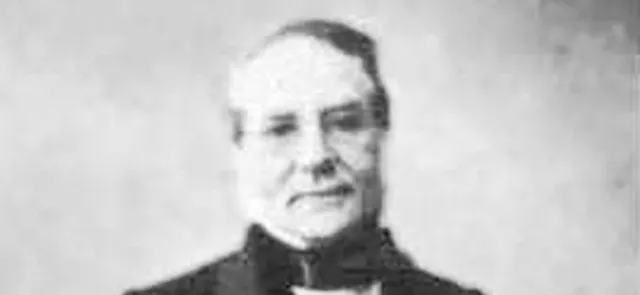
Irénée-Jules Bienaymé (1796–1878) was a respected finance inspector when he was dismissed from his post in 1848 for "lack of republican fervor". He then embarked on a brilliant career as a mathematician that would take him to the Académie des sciences.
He met Chebyshev in October 1852, and a close friendship developed between the two men. The Russian mathematician stayed with the French scholar several times, while Bienaymé, a keen student of Russian, translated his friend's writings, enabling Chebyshev to disseminate his research.
In an article defending Laplace's least-squares method against criticism from Denis Poisson, Bienaymé stated and proved the inequality that bears both their names in 1853. Chebyshev realized the importance—overlooked by his French friend—of this result. He published it and used it to prove the law of large numbers in a general setting. The Russian mathematician's fame brought the inequality to wider attention, but the real inequality is perhaps that it bears only Chebyshev's name, except in the French literature.