




Collaborative Mathematics
This issue is not fully translated into English yet; only translated content is shown.
Read the French versionAll folders in this issue
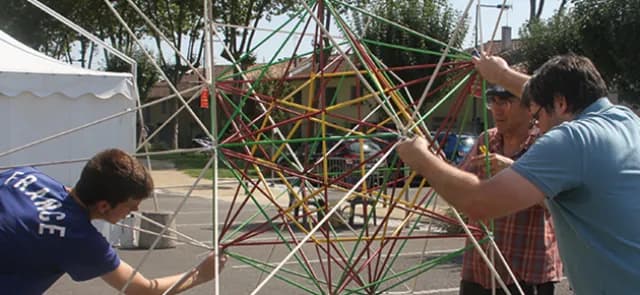
Collaborative Mathematics
Mathematics is a collective work shaped over the centuries through collaborations, whether to produce knowledge or publications. But for less than a century, practices have been revolutionized. The isolated researchers of the past are increasingly being replaced by teams with varied skills, enabling new effective approaches. Massively collaborative research of results is also made possible by the Internet and instant communication tools. Pal Erdös was one of the pioneers of this movement of which the brilliant mathematician Tim Gowers is today one of the driving forces. But knowledge sharing also happens with the general public, thanks to popularization efforts and the commitment to allow free access to research articles. Collaborative free software is emerging, as are multi-author websites like Wikipedia. Large-scale knowledge sharing: the Ancients dreamed of it, our era is implementing it!
Open problems and conjectures
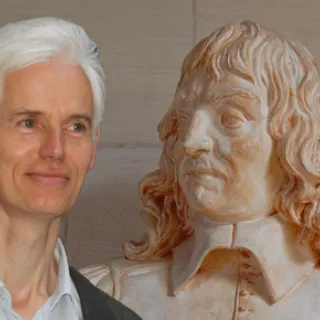
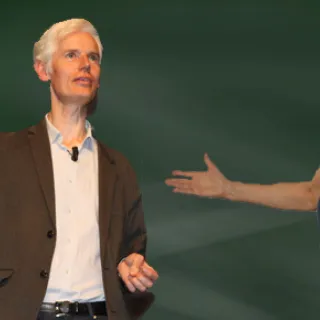
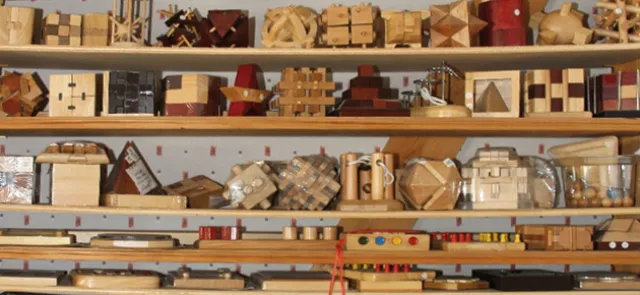
They are the driving force of mathematics. Those that spark curiosity, tease researchers and trigger breakthroughs. Who are they? Open problems, conjectures, hypotheses! The many conjectures that pepper their history, such as Goldbach's in number theory, Toeplitz's in geometry or Poincaré's in topology, are examples. Conjectures, once solved, call for others creating an endless chain of knowledge progression. A conjecture is a result that is suspected, for which no counterexample has been found, but which is not proven. In an open problem, on the other hand, the sought result is not known. All branches of mathematics are full of them: topology, combinatorics, analysis, probability, statistics... Even in geometry, objects as simple as polyhedron nets still escape our understanding!

All articles in this issue
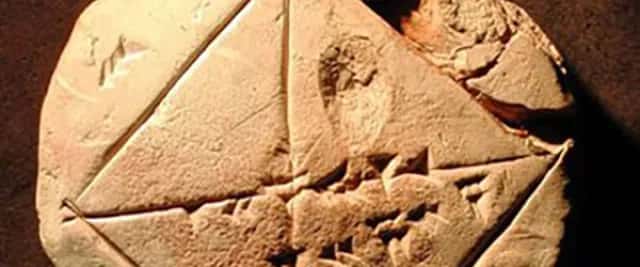
The Euclidean revolution
Some profound results, such as Pythagoras' theorem, predate any awareness of mathematics as a science. Rather, once theorized and proved, these results gave rise to this science.
The 2021 mathematical calendar is here!
In 2021, the mathematical calendar explores the solar system!

Penrose takes center stage to kick off 2021
To mark the award of the 2020 Nobel Prize in Physics to Sir Roger Penrose—a mathematician well known for his work in cosmology, differential geometry, tilings and science communication—Tangente is shaking up its schedule!

"Winter is coming"
In France, the annual influenza epidemic generally occurs between November and April. Timing therefore appears crucial to understanding how the influenza virus spreads: this pathogen has a period during which it is transmitted more readily through the population.

2020 Tangente Trophies: the winners
Promoting the interdisciplinary role of mathematics, bringing it to the attention of young people—and the not so young—and fostering creativity: these core Tangente goals find expression in the Tangente Trophies, whose 2020 winners are presented here.

Vaughan Jones, the knot magician
The mathematician Vaughan Jones, who died on September 6, 2020, profoundly influenced several areas of mathematics, including topology and functional analysis, as well as physics, particularly quantum theory. His name remains associated with powerful invariants in knot theory.

Meet Fabien Durand, president of the SMF
At the end of last June, the Société mathématique de France (SMF) elected mathematician Fabien Durand as its new president. He enthusiastically agreed to speak with the editorial team at Tangente.
Squares in art
Several artists have taken an interest in the square in order to explore its geometry