



Open problems and conjectures
They are the driving force of mathematics. Those that spark curiosity, tease researchers and trigger breakthroughs. Who are they? Open problems, conjectures, hypotheses! The many conjectures that pepper their history, such as Goldbach's in number theory, Toeplitz's in geometry or Poincaré's in topology, are examples. Conjectures, once solved, call for others creating an endless chain of knowledge progression. A conjecture is a result that is suspected, for which no counterexample has been found, but which is not proven. In an open problem, on the other hand, the sought result is not known. All branches of mathematics are full of them: topology, combinatorics, analysis, probability, statistics... Even in geometry, objects as simple as polyhedron nets still escape our understanding!
All articles in this folder

A century of conjectures
Mathematics has always advanced through the curiosity of people seeking to answer new questions and pose new problems. Once solved, these give rise to others, creating an endless chain of advances in knowledge.

Proof desperately wanted | Tangente
One hundred thousand results are stated worldwide each year—but how many of them are proved? In number theory, for example, many problems remain unsolved. Some are well known to enthusiasts, others less so...
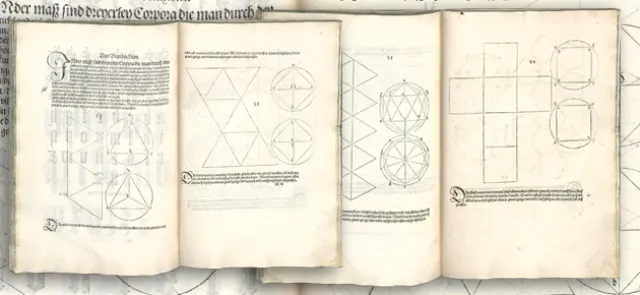
Three unsolved problems in geometry | Tangente
Geometry abounds in problems that remain unsolved. Some date back to the Renaissance! In tribute to Richard Kenneth Guy (1916–2020), here are three, gleaned from his book Unsolved Problems in Geometry (with Hallard Croft and Kenneth John Falconer, Springer, 1991).