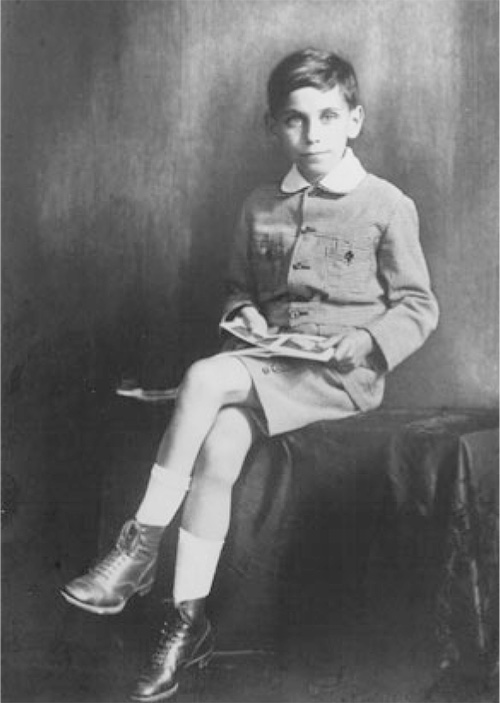
Born on the eve of the Great War, Pál Erdős (pronounced "Erdeuch") lived through a childhood heavily disrupted both by family life and by the political events then convulsing Central Europe.
He was born in Budapest in March 1913, into a non-practicing Jewish family. Both his parents were mathematics teachers. The atmosphere at home was heavy. The couple had just lost two young daughters to scarlet fever, and the boy was raised as an only child. His father was drafted into the Austro-Hungarian army; he was captured by the Russians in Galicia and spent many years as a prisoner in Siberia. The boy spent his early years excessively protected by his mother. From the age of five, he astonished people with his speed at mental arithmetic.
In the immediate aftermath of the war, Hungary, now confined within its new, shrunken borders, was politically highly unstable. After the short-lived communist dictatorship of Béla Kun, Marshal Horthy's highly authoritarian regime took hold in 1920. Antisemitism was rampant, and the boy's mother lost her job as a school headmistress. It was that same year that his compatriot John von Neumann (1903-1957), ten years his senior, left the country.