



Everyday polynomials
In the unforgiving universe of continuous functions, where objects sometimes so anarchic that they cannot be faithfully represented graphically evolve, the family of polynomials is reassuring. What could be simpler, a priori, than these combinations of monomials 1, X, X², X³…? Besides, from Viète to today's mathematical competitions, they are often called upon in challenges that feature them. Polynomials also make it possible to approach, as closely as desired, the majority of functions we encounter in everyday life. But this effective approximation sometimes comes at the expense of intuition, and therefore of the requirements!
All articles in this folder

Approximating functions efficiently
Most physical phenomena involve transcendental functions such as the exponential and trigonometric functions. To minimize computation times, we try to replace them with polynomials.

Polynomials that make a difference | Tangente
A polynomial can be evaluated without any multiplication, using addition alone. Charles Babbage based his famous "Difference Engine" on this remarkable property.
Degree 45: François Viète rises to the challenge! | Tangente
Reconstructing a historic mathematical challenge.
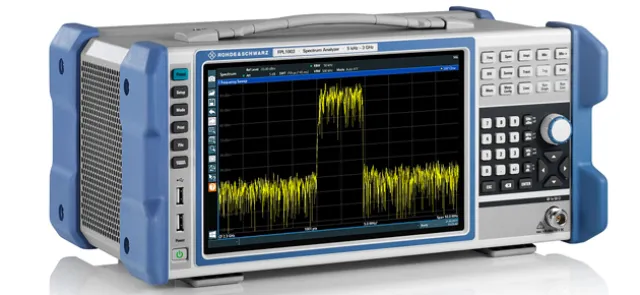
The foundations of signal processing
Harmonic analysis, born of functional analysis, studies how functions can be represented as superpositions of basis functions. In signal theory, these basis functions, often polynomials, lie at the heart of sound and image processing in our digital world.
Polynomial stories
Anyone may come across a polynomial along the way. Here's the proof...

In logic and combinatorics
In mathematical and logical puzzles, often inspired by observations of everyday life, polynomials can crop up in surprising ways. Geometry, binary logic and algorithms, peg games, combinatorics… no field is immune!