



Human geography and biodiversity
Understanding the complexity of biodiversity requires reliable and realistic modeling of ecosystems. Mathematics offers several types of tools, such as dynamical systems for predator–prey models, or linear algebra to understand population evolution dynamics. It is important to master these techniques that are extremely sensitive to initial conditions, parameter precision and calculation errors, under penalty of predicting the extinction of a non-threatened population… or the opposite.
All articles in this folder
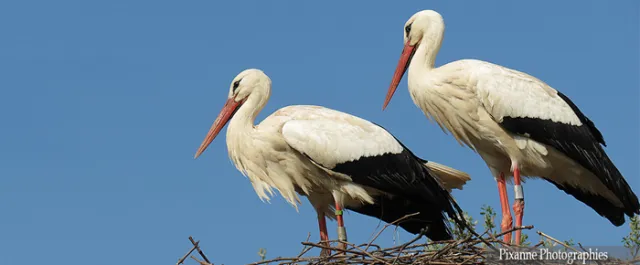
Biodiversity in equations
Biodiversity is life. Quantifying it at a given point in time is useful, but predicting how it will change is better—and mathematical modeling allows us to do just that.

The Leslie model
Modeling changes in an animal population is a frequently studied topic in mathematics and biology. But how can we account for the fact that individuals produce different numbers of offspring depending on their age? The Leslie model addresses these questions.
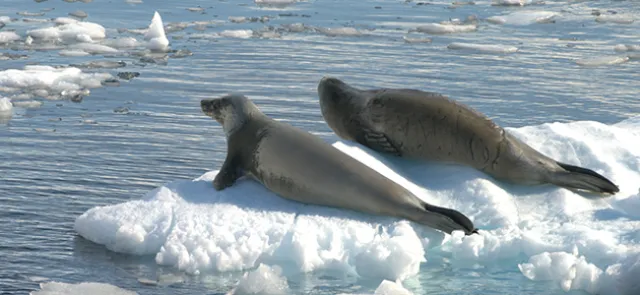
Predator–prey system | Tangente
Without predators, an animal population grows exponentially, ultimately sealing its fate. Predation can establish a balance… but may also lead to the species' extinction or to chaotic situations!

Antarctica: a still-mysterious continent | Tangente
Unlike in the Arctic, where the area covered by winter sea ice is shrinking, Antarctica's ice-covered area is growing. How can this paradox be explained when temperatures are rising?