



Infinity, axiomatic and paradoxes
As simple and fruitful as it may be, the notion of set reveals, once subjected to the merciless analysis of the logician, formidable technical problems. Paradoxes emerge: can we consider the set of all sets? Can a set be an element of itself? Infinite sets raise other questions. How many fundamentally different types of infinity exist? Infinity, self-reference, the paradoxes, lying in ambush, hold quite a few surprises for the imprudent traveler…
All articles in this folder

The axiom of choice
Being able to choose an element from a set seems natural. But it is truly natural only when the set is finite. Beyond that, an axiom is needed before we can choose! Some consequences of this axiom are surprising, so… should we accept it?
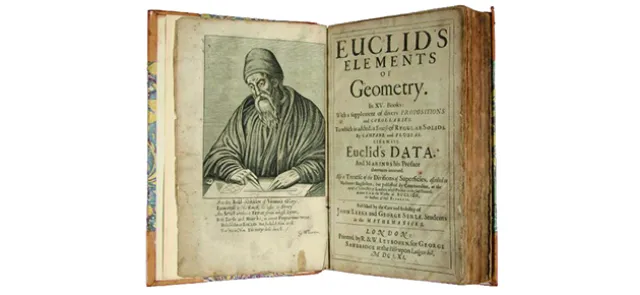
What exactly are axioms? — Geometry | Tangente
In mathematics, every proof starts from premises assumed to be true. What particular form must these premises take to become axioms, the foundation of all our current theories?
Holy paradoxes! (1): A mathematical brief | Tangente
Paradox is to logic what experiment is to the physicist: it allows us to adjust theory in response to the question posed by an alarming result. It is a springboard for the mind.
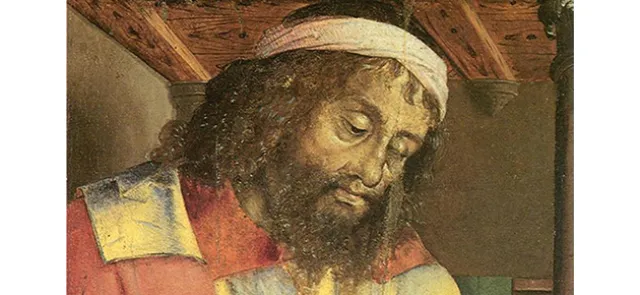
The multiplicity of infinities
Actual infinity is a mathematical fiction, useful in calculations and proofs alike. We may reject it and make do with potential infinity. But if we accept the notion of infinity, there must be more than one. Georg Cantor—him again!—proved it.
Those darn paradoxes! (2) — Mathematical note | Tangente
God exists because mathematics is consistent, and the devil exists because we cannot prove it...