



Mathematical experiments
There are the experimental sciences (physics, chemistry, biology, etc.) and mathematics, you may think. Well, no! In mathematics too, we carry out experiments, and even testing and manipulations (see Tangente Éducation 30). To divide, we test the possible quotients. At a higher level, how many conjectures, throughout history, have been stated tentatively after many attempts! Today, mathematical experiments take new forms, due to the development of computer science. What a wonderful tool the computer is to simulate, make trials, test conjectures or model a phenomenon! We must not forget, afterward, to prove…
All articles in this folder
Simulation and proof: two complementary approaches
Some problems involving chance are easier to solve by simulation... but a proof is always more convincing! Although simulation produces a result more quickly in practice, the value of a theoretical study lies in its generality.
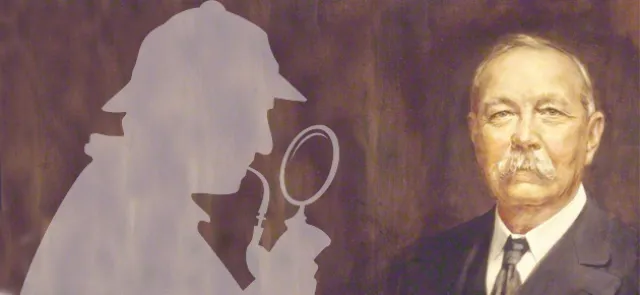
Deduction, induction, abduction: three forms of logic | Tangente
A host of tiny clues leads the detective Sherlock Holmes to formulate a theory, moving from the particular to the general. He is well aware that his method leads to the truth only if it is confirmed by the facts—that is, by observation!
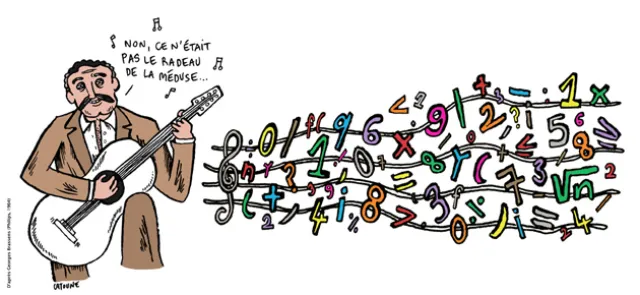
In search of friends
Integers never cease to fascinate us: divisibility raises some formidable questions, as several conjectures about perfect numbers attest. Here, experimenting with a computer is a valuable aid in the hunt for counterexamples.
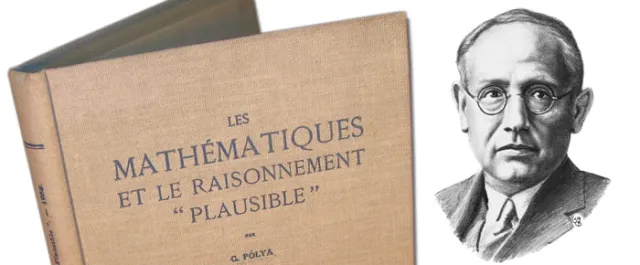
Psychological experiments in arithmetic
Like any other scientist, a mathematician makes use of experiments. But these do not necessarily resemble those conducted in other sciences: carried out mentally or on a sheet of paper, they are usually psychological in nature!
History of shapes: Geometry and art intertwined | Tangente
Mathematics inspires artists, as a wonderful exhibition at Les Tanneries, on the banks of the Loing in Amilly, Loiret, demonstrates.
Recursion: to program is to prove!
Recursion may seem like an arcane method to the uninitiated, but it makes programs easier to prove correct, and therefore safer. The key principle is that, with recursion, to program is to prove! Sorting a deck of cards illustrates this perfectly…