



Maths-Vives, mathematics to experience
Maths-Vives is a research program focused on living things, the environment and society. Equipped with funding of fifty million euros as part of the France 2030 investment plan, it is led by the CNRS. Its objective is to integrate mathematics, not only as tools serving other disciplines, but as a driver of reflection and creativity. Offering numerous partnerships with scientists from all backgrounds (medicine, biology, agriculture, geosciences, physics, economics, geography, finance, computer science…), it currently concerns ten research projects selected in 2024.
All articles in this folder
 Podcast
Mathematics in Interaction | Tangente
The Mathematics in Interaction program, launched in 2024, aims to foster interaction between mathematics and other disciplines around the themes of life sciences, the environment and society. Backed by funding of €50 million, it brings together nineteen scientific projects led by multidisciplinary teams.
 Podcast
Biology of aging and telomeres | Tangente
Can aging be modeled? That is the challenge taken up by DyLT (short for "Dynamics of Telomere Lengths"), a targeted project within the PEPR Maths-Vives program. It tackles a central question: how do telomeres—the caps at the ends of our chromosomes—shorten over time, and how can mathematics help model this complex process?
 Podcast
Financing the environmental transition | Tangente
The MIRTE project studies incentives and regulations in key sectors such as finance, energy and transport, with the aim of steering behavior toward a low-carbon economy.
 Podcast
Calculated distances, lived distances
Did you know that in Manhattan, the ways of connecting two places a few hundred metres apart number in the millions? Whereas in Cabourg, there is generally only one shortest path connecting two points? These are the very properties of mathematical distance that can help geographers and urban planners better design the spaces we live in.
 Podcast
Bacteria carried by the crowd
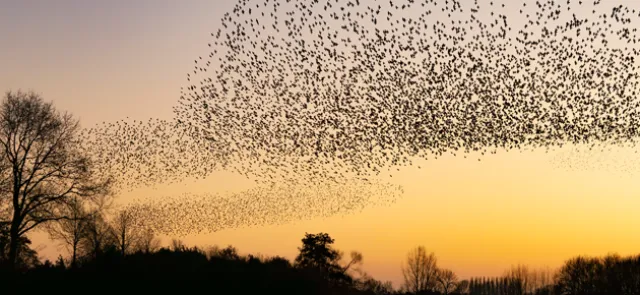
Collective dynamics abound in the animal world, from flocks of birds to colonies of bacteria. The MAMUTCELL project aims to explore and mathematically model the movements of large bacterial assemblies in heterogeneous environments.
 Podcast
The challenges of tomorrow's agriculture
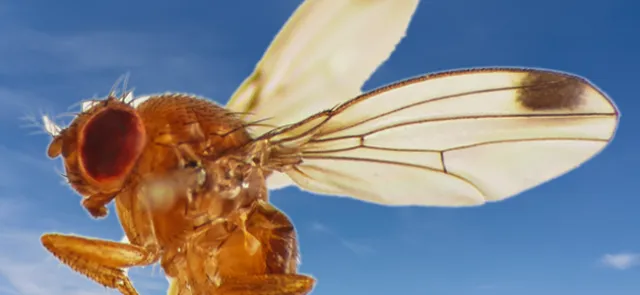
The AgroStat project studies the dynamic evolution of living organisms of interest to agronomy using an approach based on the overall study of agroecosystems. This leads to interdisciplinary work bringing together numerous scientists.