



Self-reference (1)
Self-reference is at the source of well-known paradoxes, but also of a profound crisis in the foundations of logic and mathematics. At the heart of the famous Gödel incompleteness theorem, one can find a variant of the sentence "This proposition is false". Beyond thorny philosophical problems, self-reference allows us to play with infinity, both in art and in mathematics. Thus, certain sequences of numbers have symmetries that could never have been imagined without reflecting on the rich notion of self-similarity, which reveals, to our greatest pleasure, "self-descriptive" and even "fractal" sequences. Readers will discover the continuation of this ambitious two-part feature in the next issue (Tangente 192).
All articles in this folder
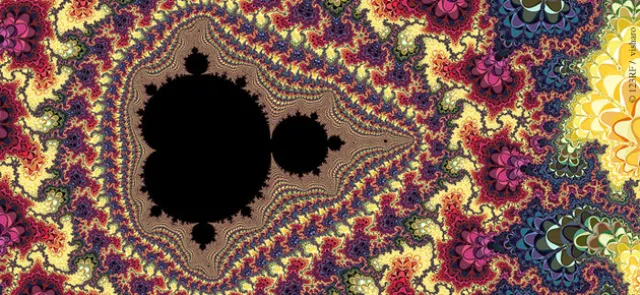
Paradoxes and self-contradictions in logic | Tangente
A source of amusement, self-reference also lies behind some famous and profound mathematical paradoxes. Logic, our senses and our certainties are all sorely tested. Reflection then takes over… and often leads to wonder!
Textual self-reference: Hofstadter | Tangente
Wordplay is fertile ground for self-reference. Examples can be found in Douglas Hofstadter's books (see Tangente 131, 2009, and Tangente 154, 2013), as well as in countless anonymous creations (found online, for instance), whether apocryphal or well documented. Here is a selection.
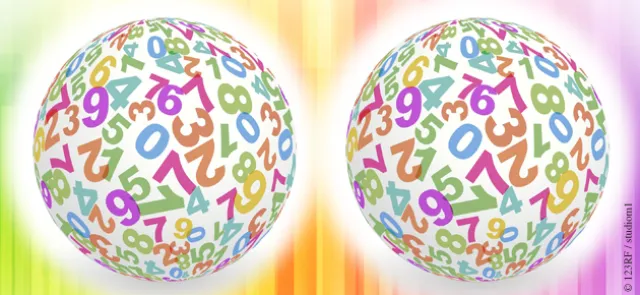
Playing with self-referential numbers | Tangente
Can the digits of a number, or the terms of a number sequence, themselves tell readers about their positions or properties? With a few ingenious constructions, they can!

Self-reference and fixed points in logic | Tangente
Self-reference is paradoxical and connected with the mathematical notion of a fixed point, the method of successive approximations, and recursive definitions. Together, these connections make this fundamental idea a natural subject for mathematics enthusiasts.
Self-referential word games | Tangente
Words, too, are fertile ground for self-referential curiosities. Here are a few.
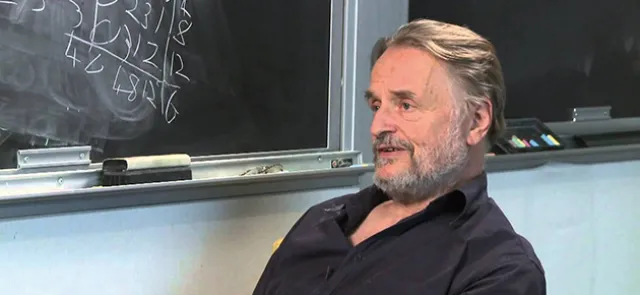
The audioactive sequence
Self-describing sequences are fairly well known among mathematics enthusiasts, but their history often is not. Even less familiar, no doubt, is the work of the man who helped bring them into the mathematical mainstream: John Conway, who devoted his life to having fun with mathematics.