



The pitfalls of percentages
Since the end of the Middle Ages, it has become customary to reduce a quantity to one hundred to compare different data. The rise of the banking system and loans with interest further reinforced the use of percentages to define rates and calculate increases and decreases. Very present in economics, percentages are now used in many other fields, invading the language of journalists and political discourse. Their very delicate handling leads to multiple errors, sometimes bringing confusion where one wanted to be clear and precise.
All articles in this folder
Percentages, for better or worse
Since antiquity, data have been compared by scaling the total to 100. The introduction of Arabic numerals gave percentages an important role, offering a clear, quick view of a wealth of statistical data... provided, of course, that one understands how they work and can count!
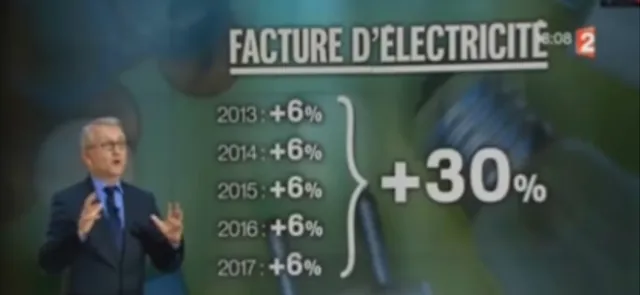
The multiplier: a tool for every citizen
Everyone encounters rates of change sooner or later. Handling them is often a source of error, although one simple, effective tool can solve many such problems: the multiplier.

They are among us: everyday mathematics | Tangente
Percentages are everywhere. Learn how to avoid their pitfalls.

The pitfalls of rates
Our thinking seems naturally additive. If we add 10% and then another 10%, we expect the total to be 20%. Yet that is wrong! Rates are not added; they are multiplied. How can we avoid the pitfalls of percentages? How can we work out the cost of a loan?

In economics too: maths at the heart of the system | Tangente
In economics, as in everyday life, rates are everywhere. Let's see how.

Mathematical economics
Economists have often used percentages in their models